The Lower Eastern Times Opening The Third Eye
Related Articles



By: Sharon Nyaga, Jewel Collage
Severe flooding caused by heavy rainfall on Friday has disrupted normal life in many parts of Kenya, with schools among the most affected institutions.
The floods, which hit Nairobi and several other counties, have led to loss of lives, destruction of infrastructure, and disruption of learning for thousands of students. Reports indicate that at least 42 people have died following the heavy rains, with Nairobi being one of the areas most affected.
Click here to join our WhatsApp Channel
Closure of Schools and Disrupted Learning
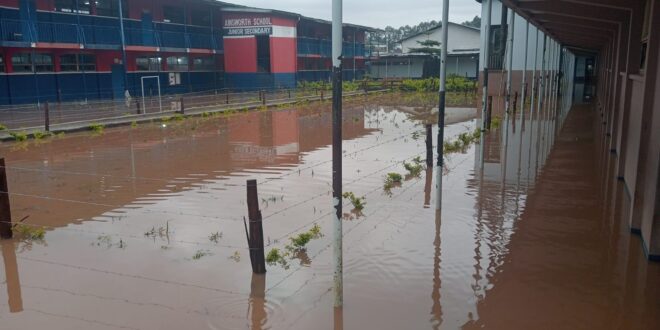
One of the immediate impacts of the floods has been the closure of some schools due to flooded classrooms and unsafe learning conditions. In areas such as Eastleigh in Nairobi, floodwaters entered school compounds, forcing administrators to suspend classes on Friday. In one school, water reached knee level within the compound, making it unsafe for both learners and teachers to access classrooms.
Unexpected school closures lead to the loss of valuable learning time. Teachers are unable to deliver lessons, and academic schedules are disrupted. For schools that already face resource challenges, such interruptions make it harder to complete the syllabus on time.
Damage to School Infrastructure
Flooding not only interrupts lessons but also damages school facilities. Classrooms, libraries, laboratories, and sanitation facilities such as toilets can be submerged or destroyed by floodwaters. During previous flooding incidents in Kenya, thousands of classrooms and sanitation facilities were reported to be flooded or rendered unusable, forcing schools to close temporarily.
Floodwaters can also destroy school equipment, learning materials, and furniture. When this occurs, schools require additional resources and time to repair the damage before normal learning can resume.
Challenges for Students and Teachers Reaching School
Flooded roads and damaged infrastructure have also made it difficult for students and teachers to travel to school. During the recent floods, several roads across Nairobi and other counties were submerged, leaving vehicles stranded and making movement extremely challenging.
In rural areas, the situation can be even worse because many schools are located in flood-prone regions. Students often have to walk long distances, and flooded rivers or damaged bridges make the journey to school dangerous.

Displacement of Families and Learners
Floods frequently force families to leave their homes and move to temporary shelters. When families are displaced, children are more likely to miss school for extended periods. In previous flood disasters in Kenya, thousands of people were displaced, and some schools were turned into temporary shelters for affected families.
This situation disrupts children’s education and may even lead to school dropouts, particularly among vulnerable families who lose their homes or sources of income.
Long-Term Impact on Education
The repeated occurrence of floods in Kenya has raised concerns about the long-term effects on the education system. In past flooding seasons, more than 15,000 learners were unable to return to school because their institutions were damaged or destroyed.
Education experts say that stronger infrastructure, improved drainage systems, and better disaster preparedness are necessary to protect schools from such disasters.
Friday’s floods have once again demonstrated how natural disasters can seriously disrupt education in Kenya. Flooded classrooms, damaged facilities, displaced families, and school closures all affect students and teachers. As the long-rain season continues, authorities and communities will need to strengthen disaster preparedness measures to protect schools and ensure that learning continues even during extreme weather conditions.