The Lower Eastern Times Opening The Third Eye

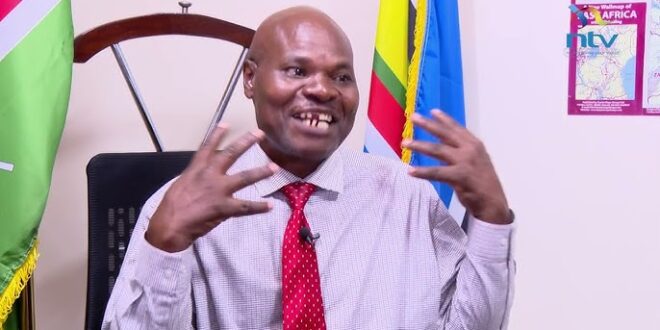
Tourist Guide Association CEO Kennedy Kaunda has said he was unaware of a key meeting that ended the fuel price strike, revealing he arrived late and missed major parts of the final negotiations.
Speaking in an interview on Citizen TV’s JK Live, Kaunda explained that during the second round of talks between transport stakeholders and government officials, he arrived when discussions were already concluding.
“I was at the first and second meeting. The second meeting, I came late. They actually called me to rush there on a motorbike. By the time I arrived, they were making final remarks. I missed it,” he said.
Click here to join our WhatsApp Channel
Kaunda added that he was initially not informed about the meeting and only received a last-minute call from a coordinator asking him to hurry.
“I was in my office. I didn’t know there was a meeting. A coordinator called me and told me to come immediately,” he said.
He also dismissed claims circulating online that he received a “brown envelope” after the talks, following public criticism over his shift in tone between the first and second meetings.
“People have been asking me where the brown envelope is. I was not given anything. What surprised me is that the discussions had already been concluded when I arrived,” Kaunda said.
He further noted that some matatu operators had already accepted aspects of the proposed deal, while others viewed the seven-day suspension of the strike as an opportunity for continued negotiations.
“There are operators who agreed to the deal, and I saw the seven days as goodwill to continue talks and work toward a Sh10 fuel reduction,” he added.
During the same discussion, Federation of Public Transport Sector CEO Kushian Muchiri criticised Transport CS Davis Chirchir, accusing him of failing to regularly engage stakeholders in the transport sector.
Muchiri said repeated attempts to seek clarification on fuel price increases were unsuccessful and argued that lack of engagement worsened tensions.
“This is the first time since 2018 that we’ve had a Transport Minister who doesn’t meet stakeholders,” he said.
He contrasted the current leadership with previous administrations, saying earlier ministers maintained consistent communication with industry players.
“If the minister had been engaging stakeholders regularly, we would not be in this situation,” he added.
Muchiri also claimed that digital strategist Dennis Itumbi helped push for the meeting between government officials and transport stakeholders.
On the government’s side, EPRA Director for Petroleum and Gas Edward Kinyua defended the talks, saying they involved three Cabinet Secretaries and reflected a coordinated government response.
“The meeting was chaired by CS Chirchir. We had three CSs present: Chirchir, Wandayi, and Mbadi,” he said.
He maintained that the government had acted in good faith, noting that the fuel crisis had escalated rapidly and required urgent intervention.

Meanwhile, during the tense negotiations at Transcom House, the government had proposed a Sh10 reduction in diesel prices as part of efforts to narrow the gap between diesel and kerosene and curb fuel adulteration.
However, transport operators rejected the proposal, saying it fell short of their demand for a Sh30 to Sh35 reduction.
“We have not agreed to anything. The strike is still on,” Kaunda had declared during the earlier briefing, moments after the government announcement.
The disagreement publicly exposed divisions in the talks, despite government claims that progress had been made.