 The Lower Eastern Times Opening The Third Eye
Related Articles

By: BBC
Arsenal fans in Uganda celebrated until dawn this week, outside stadiums and bars across Uganda, after their team secured a victory over Real Madrid.
The north London-based team won 3-0, at home, in the first leg of the Champions League quarter-final.
Every time the club plays, the East African nation stands up. Along with Manchester United; they are the English Premier League (EPL) teams with the most fans in Uganda.
Church services, packed with fans decked out in the red and white of the Gunners, are held before big matches.
Fanaticism for Arsenal and other English clubs is evident throughout Uganda, with shops and small traders selling jerseys and large companies advertising, and gambling companies doing big business.
“I have covered football across Africa for many years and I can tell you, football fandom in Uganda is on another level,” says veteran sports journalist Isaac Mumema.
For Swale Suleiman, a mechanic and Manchester United fan I met at a garage in the capital, Kampala, the excitement lies in the fact that EPL matches are competitive, entertaining and sometimes unpredictable and even “a small team can cause chaos.”
English clubs have fans all over Uganda, even through WhatsApp groups to further develop discussions, away from the halls and bars.
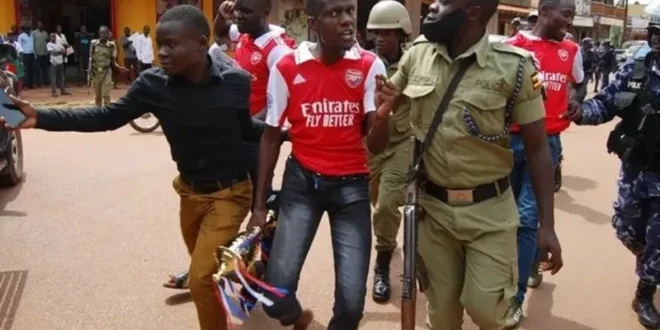
But Arsenal fans seem to be taking their fandom to another level – to the point where some were arrested for holding victory parades without a police report after winning a big match.
However, this type of fanaticism also has a dark side, the love of this sport sometimes turns into deadly violence.
“Ugandans are very passionate about football,” says Uganda Football Coaches Association (UFCA) chairman Stone Kyambadde.
“This football fandom has increased even more among young people because they watch the English Premier League wherever they are,” he says.
They can follow through their phones, but mainly through gathering events, even in remote villages, there are halls and televisions where fans gather to watch the matches.
There are times of sadness. Villagers near Lake Victoria gathered last December to bury a 30-year-old carpenter, who was shot dead while celebrating Arsenal’s victory over Manchester United.
John Senyange was watching the match in a video arcade in the town of Lukaya – when cheers erupted from Arsenal fans after the final whistle, the cheers angering their opponents, including the goalkeeper, who reportedly opened fire.
Earlier this season, 300 kilometers (186 miles) southwest of Kabale, Manchester United fan Benjamin Ndyamuhaki was stabbed to death by an Arsenal fan after the pair argued over the result of a match between Arsenal and Liverpool.
In 2023, there were four Premier League-related deaths, in different parts of the country – two Arsenal fans were killed by Man Utd supporters, one fan died in mysterious circumstances after Man Utd were thrashed 7-0 by Liverpool and another man died from stab wounds after trying to intervene in a fight after Arsenal’s defeat to Man Utd.
Football violence in Uganda began in the 1980s. Local games were characterized by stone-throwing and fist-fighting between rival fans.
“There have always been incidents of violence when Express FC and SC Villa – the two biggest teams in Uganda – play matches,” says sports analyst Lumbuye Linika.
But things have gotten worse with gambling. Many fans are trying to make a living by putting their money there.
In a tragic incident several years ago, police said a man committed suicide by poisoning himself after losing money gambling on football.
“Many football fans turn to gambling as a way to make quick money,” says Amos Kalwegira, a Kampala resident, who stopped to talk to me on a Kampala street when I saw him wearing a Man Utd shirt.
“This has been a huge emotional investment that often turns into a fight when football results go badly.”
“Football should make us happy. Western football should be a form of entertainment but here in Uganda we have turned it into a way of earning a living, and destroying happiness,” he says.
Collins Bongomin, a senior officer at one of Uganda’s gambling companies, says gambling companies should not be blamed for football violence.
“People don’t have the skills to control their expectations and anger,” he told the BBC, noting the companies’ efforts to encourage responsible gambling.
There are more than 2,000 gambling shops across Uganda, which also brings in huge profits for the government, which collected about US$50 million (£40m) in tax revenue from gambling last year, according to local media.
Age, Poverty and Alcohol
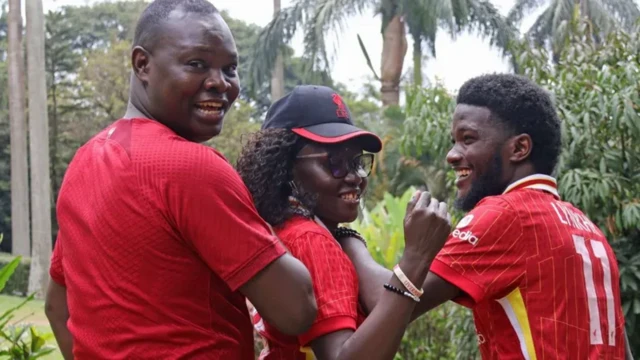
Some say that the hostile fandom is more prevalent among Arsenal and Man Utd fans in Uganda. They say it is due to age and history.
Linika, a Liverpool supporter, says his team has many older fans and those with good incomes, while Arsenal and Man Utd fans come from poorer areas.
“We are currently top of the Premier League table, and it is rare to hear of a Liverpool fan being involved in violence,” he says.
Pamela Icumar, known as Mama Liverpool because of her intense devotion to the Reds, and part of an all-female fan club in Kampala, says her fellow fans know how to control their emotions “even when we lose”.
But Arsenal fan, Agnes Katende, has taken issue with this argument, when I met her in Kampala.
For Solomon Kutesa, secretary of the official Arsenal Supporters Club in Uganda, the country’s drinking culture is to blame for football violence.
“Some fans watch games drunk and it becomes difficult to stop them when their teams lose,” he told the BBC.
Others suggest taking fans to stadiums and removing them from bars. They believe this could alleviate the situation and revive the Uganda Premier League.
Reviving local football
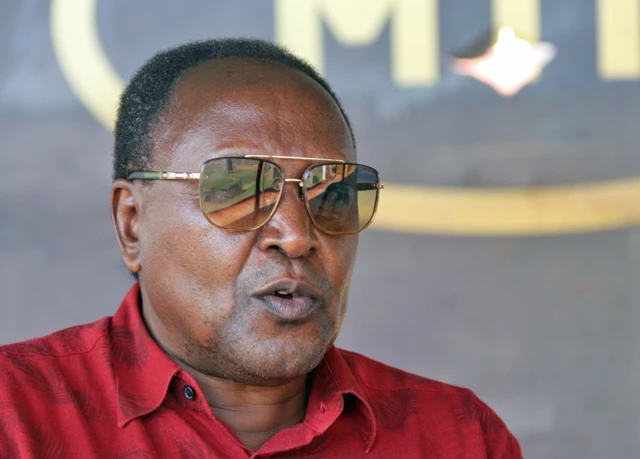
“The current generation only knows European football. If we invest more in the domestic league we can successfully remove the focus on foreign games,” says Mr Kyambadde, while acknowledging that the domestic league has a bad reputation and lack of star players.
Former footballer Tom Lwanga, who played for the Uganda national team when it reached the final of the 1978 Africa Cup of Nations, agrees.
“We gained popularity because we used to play when the stadiums were full. We need to go back to those days and control the excitement of European football,” he told me at the empty Phillip Omondi Stadium in Kampala as we watched a football match.
Some blame the lack of live television coverage for the decline of the Ugandan league.
Asuman Basalirwa, chairman of the Ugandan Parliamentary Club, who was also at the Omondi Stadium, is among those trying to strengthen local football.
“I am among the few MPs who watch local football and we want to see more leaders, even the president, coming to the stadiums to support local teams,” he says.
But for Mr Kutesa, whose love for Arsenal dates back to the days of players like Nwankwo Kanu and Thierry Henry, the Arsenal team is important to him.