The Lower Eastern Times Opening The Third Eye
By: Victor Ochieng – Laikipia University
South Sudan is facing a rapidly escalating humanitarian emergency, with millions of lives hanging in the balance as international aid efforts fall dangerously short. What was already one of the world’s most fragile states is now teetering on the edge of catastrophe, driven by conflict, hunger, displacement, and a critical lack of global support.
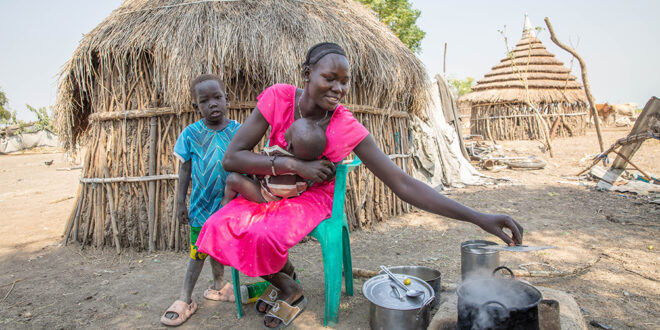
Recent assessments by United Nations agencies paint a grim picture: approximately 7.8 million people—over half the population—are experiencing acute food insecurity. This means millions of families are struggling to access even the most basic meals, with many forced to survive on wild plants and unsafe food sources.
Children are bearing the heaviest burden. Around 2.2 million children are acutely malnourished, and nearly 700,000 face life-threatening conditions if urgent nutritional support is not provided. Aid agencies warn that without immediate intervention, parts of the country could slip into full-scale famine.
The root causes of the crisis are deeply intertwined with ongoing insecurity. Renewed violence in regions such as Jonglei State has displaced hundreds of thousands of people, disrupting farming, trade, and access to essential services. Entire communities have been forced to flee their homes, leaving behind crops and livelihoods.
In some areas, humanitarian access is severely restricted. Reports indicate that civilians trapped in conflict zones are being cut off from food, clean water, and medical care, exacerbating already dire conditions.
Aid Blockages and Funding Gaps
Despite the scale of the emergency, humanitarian operations are struggling to keep up. Aid agencies face significant challenges, including insecurity, logistical barriers, and political interference. In several instances, deliveries of life-saving assistance have been delayed or blocked entirely.
Compounding the situation is a severe funding shortfall. Global humanitarian appeals remain underfunded, limiting the ability of organizations to scale up their response. At the same time, rising global fuel prices and supply chain disruptions have sharply increased the cost of delivering aid, further straining already limited resources.
Climate Shocks and Economic Collapse
South Sudan’s crisis is also being worsened by environmental and economic pressures. Recurrent flooding, erratic rainfall, and poor harvests have devastated agricultural production, reducing food availability across the country.
At the same time, economic instability has driven up food prices, making basic commodities unaffordable for many families. With livelihoods destroyed and markets disrupted, millions are left with no means to cope.
A Warning to the International Community
Humanitarian organizations are issuing urgent warnings: without immediate and sustained international support, the crisis could spiral into an irreversible catastrophe. The gap between needs and available aid continues to widen, leaving vulnerable populations—especially women and children—at extreme risk.
The situation in South Sudan is not merely a local emergency; it is a global test of solidarity and responsibility. As crises multiply worldwide, there is growing concern that South Sudan is being overlooked, even as conditions deteriorate rapidly.
South Sudan stands at a critical crossroads. The convergence of conflict, hunger, displacement, and inadequate aid has created one of the most severe humanitarian crises in the world today. Without urgent international action—both financial and political—the consequences could be devastating, with famine, mass suffering, and loss of life on an unprecedented scale.
The window to act is closing.