The Lower Eastern Times Opening The Third Eye

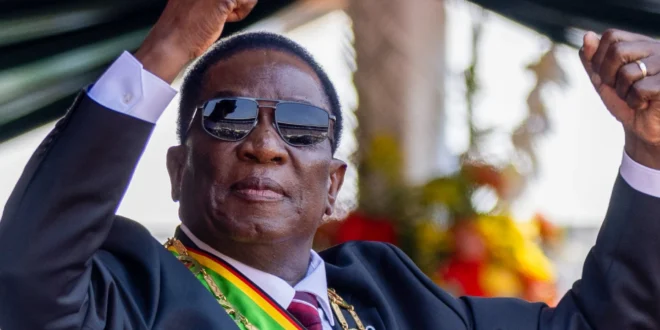
Zimbabwean President Emmerson Mnangagwa has declared September 15, his birthday, a public holiday to be observed annually across the country under the name Munhumutapa Day.
The decision was announced through a government notice shared by the Zimbabwe Broadcasting Corporation (ZBC), the country’s state broadcaster. From now on, September 15 will be recognised as a national public holiday every year.
Click here to join our WhatsApp Channel
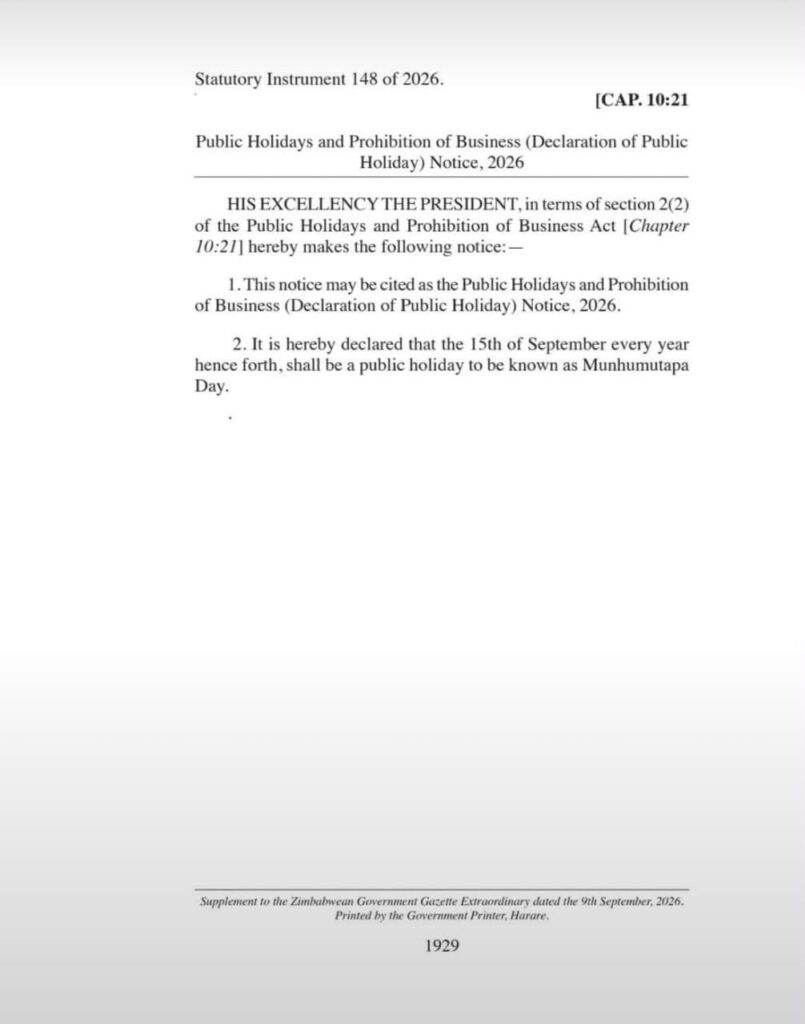
The holiday was established through Statutory Instrument 148 of 2026, officially known as the Public Holidays and Prohibition of Business (Declaration of Public Holiday) Notice, 2026.
The notice was issued under Section 2(2) of the Public Holidays and Prohibition of Business Act, Chapter 10:21.
It states that September 15 of every year will henceforth be observed as a public holiday known as Munhumutapa Day.
The move effectively places Mnangagwa’s birthday on Zimbabwe’s official calendar as an annual national holiday.
Why Munhumutapa Day?
The name Munhumutapa is drawn from the historic Mutapa Empire, a powerful Shona kingdom that existed in southern Africa between the 14th and 17th centuries.
The Mutapa state controlled a significant territory covering parts of modern-day Zimbabwe and neighbouring areas. Its legacy forms an important part of Zimbabwe’s pre-colonial history and cultural heritage.
Authorities have therefore framed the new holiday as a celebration of the country’s historical and cultural identity.
Despite this explanation, the decision has attracted criticism and mockery, largely because the holiday falls on the president’s birthday.
Comes After Controversial Constitutional Changes
The announcement comes months after Mnangagwa approved a constitutional amendment that increased the terms of office for the president and Parliament from five years to seven.
The amendment effectively moved Zimbabwe’s next general election from 2028 to 2030 and also introduced changes to the presidential election system.
The constitutional changes have generated debate about Zimbabwe’s political structure and the future of the presidency.
Mnangagwa, 83, has served as Zimbabwe’s president since 2017, when he assumed power following the removal of longtime ruler Robert Mugabe.