The Lower Eastern Times Opening The Third Eye

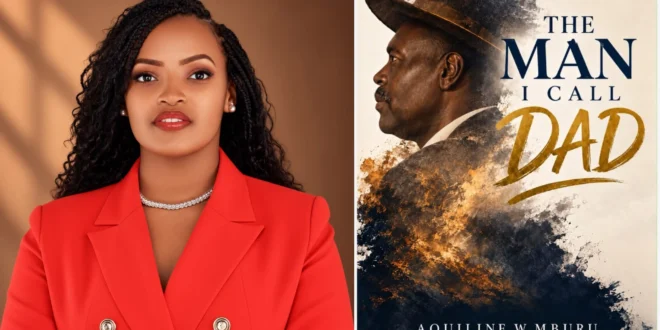
When Aquiline Mburu began keeping journals as a schoolgirl, she was not necessarily preparing to become an author. She was simply finding a place to put the feelings she struggled to express.
Among the thoughts she committed to paper were reflections about her father — the lessons she had learnt from him, the person she saw in him and the words she sometimes found difficult to say aloud.
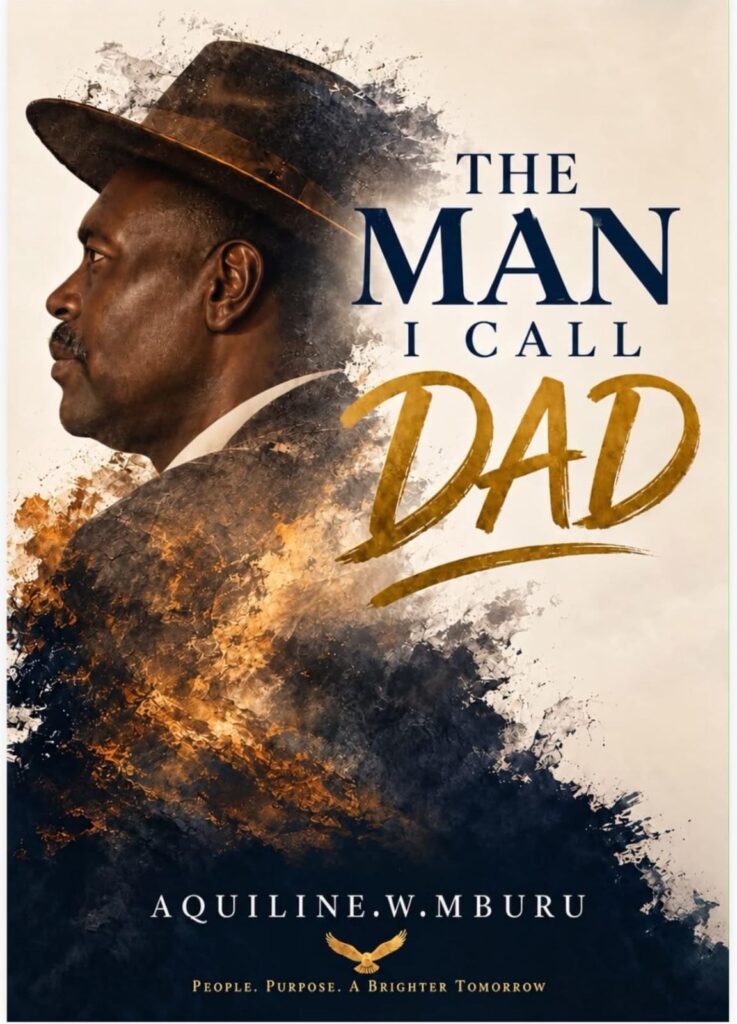
Years later, those private writings have become the foundation of The Man I Call Dad, a book through which Mburu examines the influence of fathers, mentors and other significant figures in our lives.
Click here to join our WhatsApp Channel
Scheduled for launch in early 2027, the book is a personal exploration of family relationships, identity, emotional healing and the legacies people leave through their everyday actions.
For Mburu, its message is particularly relevant in societies where expressing affection and vulnerability between fathers and their children can be difficult.
“I bet many people have never told their dads words like ‘I love you, Dad,’ ‘I see you’ and ‘I value you,’” she says.
Her book seeks to open up that conversation, encouraging people to reflect on relationships that have shaped them and find the courage to express feelings that might otherwise remain unspoken.
Yet, beyond its title, The Man I Call Dad is also a story about Mburu herself — her childhood, her ambitions, the people who inspired her and her continuing search for purpose.
A daughter’s perspective
The journey towards publishing the book began with the journals Mburu kept during her school years, particularly when she felt emotionally overwhelmed.
She had written extensively about her father, recording thoughts and experiences that she later revisited with the understanding of an adult.
What emerged was more than a collection of personal memories. It became an opportunity to explore the lessons she had absorbed from her upbringing and the influence of men in shaping individual lives.
Her father was central to the project, but she wanted its reach to extend beyond biological relationships.
Mentors, bosses, leaders and coaches also feature in the broader message of the book because, in Mburu’s view, the people who shape our lives are not always related to us.

Her father’s love for newspapers offered another source of inspiration. She imagined a book that men could read and see themselves reflected in, particularly in a world where their emotional experiences and contributions may go unacknowledged.
But the decision to write also carried a personal urgency: she wanted her father to know how she viewed him while he could still read her words.
“I wanted him to experience that appreciation in his lifetime, not hear it when it is too late,” she says.

The greatness that goes unnoticed
Ask Aquiline what she considers her father’s most important lesson, and her answer is direct: be a focused human being.
However, she says many of the lessons she learnt from him did not necessarily come through formal instruction. They came from observing how he lived and interacted with others.
“Children do not learn through words alone; they learn through the actions they observe,” she says.
For Aquiline, her father’s influence is most visible in the lives of his children. Looking at her brothers and sister, she sees a legacy expressed through the values they carry and the people they are becoming.
She challenges the idea that greatness must be accompanied by fame, public recognition or a place in history books.
Her father, she observes, may not be a celebrity or a household name, but his impact on the people around him remains significant.
It is this understanding of greatness that gives the book much of its meaning. It shifts attention from public achievements to the quieter work of raising children, shaping character and influencing others through everyday decisions.
In telling her father’s story, Mburu invites readers to consider the people whose contributions have helped make them who they are.
An eagle’s vision
Aquiline’s search for identity is also reflected in her name.
Named after her grandmother, she says her curiosity about the meaning of Aquiline became an important part of understanding who she was and the person she hoped to become.
Her research led her to the story of Saint Aquilina, a young Christian martyr associated with Lebanon. She also discovered the connection between Aquiline and the eagle, her favourite bird and a symbol she associates with vision, strength, freedom and leadership.
The symbolism resonates with her ambitions.
Aquiline wants to become an impactful, empathetic and visionary leader, guided by conviction and a sense of purpose.
She draws inspiration from the leadership philosophy of the late motivational speaker Myles Munroe, whose teachings emphasised the relationship between influence, inspiration and purpose.
For her, leadership is not simply about holding a position. It is about inspiring others and helping them discover their own potential.
That outlook also informs how she approaches relationships. She says she is intentional about the people she associates with and is comfortable standing alone rather than compromising her identity to gain acceptance.
Her journey, she insists, is still unfolding.
The women and men who shaped her ambitions
Among the figures who inspired Mburu during her formative years was the late Wangari Maathai, the Kenyan environmentalist and Nobel Peace Prize laureate whose work demonstrated how one person’s conviction could influence the world.
Mburu admired Maathai’s journey so much that she once dreamed of attending the schools she had attended.
After completing her Kenya Certificate of Primary Education (KCPE), she joined Loreto High School Limuru.
As she matured, however, she realised that inspiration alone was not enough. She needed to discover her own identity rather than simply aspire to follow another person’s path.
Another significant influence was Ex Gatundu South MP Hon. Moses Kuria, whom she encountered while in Class Eight.
Mburu was among the school’s top three students selected for Constituency Development Fund (CDF) sponsorship, an opportunity that gave her the chance to visit Mombasa for the first time.
She recalls the experience as an introduction to the potential of grassroots leadership to change lives by opening doors for young people.
The encounter strengthened her interest in leadership and contributed to her decision to pursue Public Administration and Leadership at Jomo Kenyatta University of Agriculture and Technology (JKUAT).
These experiences, alongside her father’s influence, helped shape her understanding that leadership begins with personal conviction but finds meaning in its impact on others.
A mentor who helped bring her vision to life
Beyond the leaders who inspired her ambitions, Mburu credits Norwegian coach and mentor Thomas Kristiansen for playing a significant role in bringing The Man I Call Dad to publication.
Kristiansen, a hypnosis advocate whose work and book, The Architecture of Change, have inspired her, guided her through the publishing process and wrote the foreword to her book.
Aquiline says his belief in her vision has been instrumental in turning her idea into a published work.
His mentorship reflects one of the book’s central themes: the influence of people who recognise our potential and help us pursue our ambitions.

For Aquiline , the experience reinforces her belief that personal growth is rarely a solitary journey. Just as her father shaped her values and public figures inspired her leadership ambitions, mentors can help transform ideas into reality.
Learning through life’s difficult moments
Aquiline does not describe personal growth as a straightforward journey.
She acknowledges challenges in school, at work and in relationships, experiences that have forced her to reflect on her decisions and the direction of her life.
One question she continually asks herself is whether her choices align with her purpose or are driven by the need to survive.
The distinction matters to her because she believes people can become so consumed by meeting immediate demands that they lose sight of their aspirations and values.
Her response to adversity is grounded in optimism. She sees difficult experiences as opportunities to develop resilience, deepen self-awareness and gain a better understanding of oneself.
This outlook is captured in her description of herself as “still becoming” — an acknowledgement that personal development is never entirely complete.
Rather than presenting herself as someone who has figured everything out, Mburu embraces the idea that identity is shaped continuously by experience, reflection and deliberate choices.
It is a perspective that connects her ambitions as a leader with the personal themes explored in her book.
Healing the past, shaping the future
Perhaps the most introspective part of The Man I Call Dad is its exploration of the father wound — the emotional pain that can arise from difficult or unresolved relationships with fathers.
Mburu says writing the book took her back to her childhood and helped her understand her younger self from a more mature perspective. She describes the process as re-parenting herself.
The experience also deepened her understanding of how early family relationships can influence confidence, identity and connections with others later in life.
Importantly, she recognises that not everyone has experienced fatherhood positively.
For readers who have grown up with absent, distant or complicated father figures, her message is not to dismiss their pain or pretend that every family relationship is healthy.
Instead, she encourages people to confront their experiences, pursue healing and make conscious decisions about the patterns they want to carry into the future.
In examining the father wound, she asks readers to consider the lives their parents lived before becoming parents themselves.
Her argument is that emotional patterns can travel across generations unless someone makes a deliberate decision to change them.
She credits her own father with breaking barriers and redefining his story, while acknowledging that, like everyone else, he is imperfect.
“Our past does not have to determine our future; we can redefine it through the choices we make today,” she says.
For Mburu, that belief extends beyond family relationships to the way people lead, mentor and raise children.

A book about more than fathers
Although its title centres on a father, The Man I Call Dad ultimately raises broader questions about influence, identity and the relationships that shape human development.
It asks readers to reflect on the people who helped them grow, the experiences they are still trying to understand and the values they hope to pass on to future generations.
For Mburu, the challenge is to become more conscious of how we affect others — whether as parents, mentors, colleagues or leaders.
Her own journey brings together the influence of her father, the inspiration she drew from public figures and the lessons she has learnt through personal challenges.
These experiences have helped shape her vision of leadership as something rooted in empathy, authenticity and purposeful action.
As she prepares to introduce the book to readers, Mburu remains conscious that her own story is still being written.
She may have begun by documenting feelings she could not easily express, but those private reflections have developed into a wider conversation about family, healing and the human need to be understood.
For her, the ultimate measure of a life is not simply what a person achieves, but also the people they influence and the legacy they leave behind.
Connect with Aquiline Mburu
- WhatsApp: +254 701 516 040
- Facebook: Aquiline Mburu
- TikTok: Aquiline Mburu
- X: Aquiline Mburu