The Lower Eastern Times Opening The Third Eye

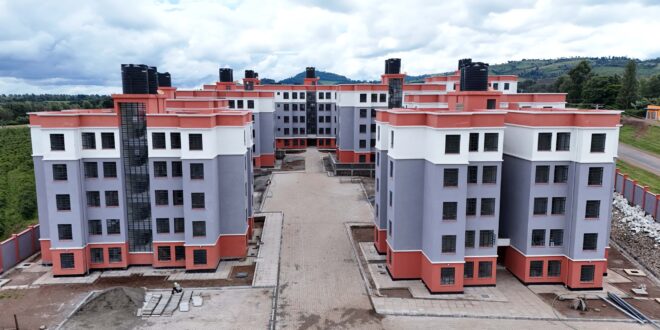
President William Ruto’s Affordable Housing Programme is facing another legal battle after a fresh appeal challenging the constitutionality of the 1.5 per cent housing levy was lodged at the Supreme Court.
Peter Okiro has moved to challenge a Court of Appeal decision that upheld the Affordable Housing Act, 2024, paving the way for another round of legal proceedings over the controversial tax used to finance the government’s affordable housing initiative.
In directions issued on November 11, the Supreme Court instructed Okiro to serve his petition on the respondents by close of business on the same day.
Click here to join our WhatsApp Channel
The respondents have been given 14 days from the date of service to submit their responses, after which Okiro will have seven days to file a rejoinder, if necessary.
The case is scheduled for a virtual mention on December 4, 2026, when the court is expected to issue further directions on its progress.
The latest court directions do not amount to a ruling on the appeal’s merits and neither do they suspend the existing housing levy. Instead, they outline the procedural steps required before the Supreme Court can consider the dispute.
Court of Appeal had upheld the housing levy
The latest legal challenge follows a September 25, 2026 decision by a five-judge Court of Appeal bench, which dismissed 42 consolidated appeals challenging the Affordable Housing Act, 2024.
The appellate court ruled that the legislation was constitutional, maintaining that the government had the authority to impose the levy as part of its taxation powers to finance a legitimate public programme.
The judges also dismissed arguments that the deductions infringed on citizens’ property rights, particularly because some taxpayers might never directly benefit from the housing projects financed through their contributions.
In its judgment, the court maintained that taxes approved by Parliament for a clearly defined public purpose did not amount to an infringement of private property rights.
It further observed that the Affordable Housing Act was designed to address the constitutional obligation of ensuring citizens have access to adequate and affordable housing.
The judges also rejected claims that the different methods used to collect contributions from salaried and non-salaried workers amounted to unlawful discrimination.
They dismissed arguments that employees in the formal sector were being unfairly targeted through compulsory salary deductions.
How the housing levy legal battle started
The dispute dates back to November 2023, when the High Court declared the housing levy introduced through the Finance Act, 2023 unconstitutional.
The court’s decision was partly based on the absence of a sufficient legal framework governing the levy and concerns that the deductions discriminated against salaried employees.
Following the ruling, the government introduced the Affordable Housing Bill, which was subsequently enacted into law as the Affordable Housing Act, 2024.
President Ruto assented to the legislation on March 19, 2024, creating a new legal framework for collecting and managing the housing contributions.
The new law, however, faced fresh constitutional challenges, which were dismissed by the High Court in October 2024.
The subsequent appeals were consolidated and eventually determined by the Court of Appeal in September 2026, when the judges upheld the legislation.
How much Kenyans pay under the housing levy
Under the current Affordable Housing Levy framework, employees are required to contribute 1.5 per cent of their gross monthly salaries towards the government programme.
Employers are also required to make a matching contribution equivalent to 1.5 per cent of their employees’ gross salaries.
Workers outside formal employment are similarly required to contribute 1.5 per cent of their gross income, subject to the applicable legal provisions.
The deductions form a major part of the financing structure for President Ruto’s Affordable Housing Programme, which aims to increase access to affordable homes while creating employment opportunities and stimulating investment in the construction sector.

What happens next?
The fresh appeal introduces another legal hurdle for the government’s housing programme, whose financing model relies heavily on statutory contributions from employees, employers and other income earners.
The Supreme Court’s December 4, 2026 virtual mention will provide an opportunity for the judges to issue further instructions on how the case will proceed.
However, the court has not yet made any determination on the constitutional issues raised in Okiro’s latest petition.
For now, the Affordable Housing Act, 2024 remains in force, and the 1.5 per cent housing levy continues to apply as the new legal challenge moves through the judicial process.