The Lower Eastern Times Opening The Third Eye

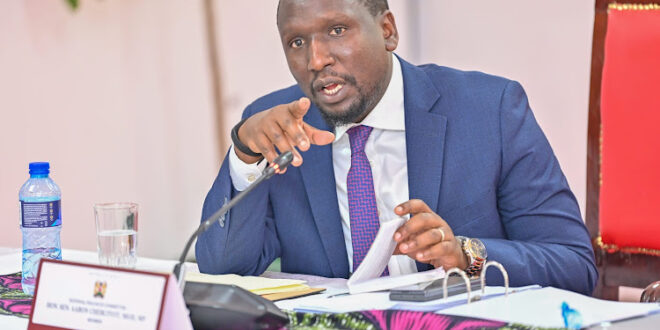
Senate Majority Leader Aaron Cheruiyot has joined the ongoing debate on the state of the judiciary, urging lawyers to refrain from involvement due to potential conflicts of interest. Cheruiyot asserted that other voices should be allowed to discuss the matter, emphasizing that corrupt judges often require the support of interested lawyers in their maneuvers.
Defending the president’s comments on corruption within the judicial system, Kericho Senator Cheruiyot maintained that Parliament, like the judiciary, faces criticism in the course of its duties. He expressed his belief in the democratic process, supporting the call for public discourse initiated by the president and discouraging any attempts to stifle it.
In response to Chief Justice Martha Koome’s call for reporting complaints of alleged misconduct or corruption, Cheruiyot criticized her, pointing out that only five corrupt judges have been removed by the Judicial Service Commission (JSC) in the last 13 years. He questioned the effectiveness of reporting to the JSC, highlighting the low number of removed judges as evidence.
The Law Society of Kenya (LSK) strongly criticized Deputy President Ruto, urging him to provide evidence of judicial corruption to the Judicial Service Commission rather than making public accusations against the entire judiciary. LSK President Eric Theuri emphasized the importance of channeling corruption allegations through established channels, such as the JSC, to maintain the rule of law.
LSK also called on its members to participate in peaceful nationwide protests in support of the judiciary and the rule of law. The society encouraged members to wear purple ribbons and join the protests to demonstrate solidarity with the judiciary.
Deputy President Ruto, during the burial of Senator John Methu’s father in Nyandarua, had alleged that certain judicial officers were colluding with powerful cartels to impede state projects, citing examples like the National Hospital Insurance Fund and the affordable housing project. He pledged to uphold the judiciary’s independence but denounced what he termed as “judicial impunity and tyranny.”