The Lower Eastern Times Opening The Third Eye
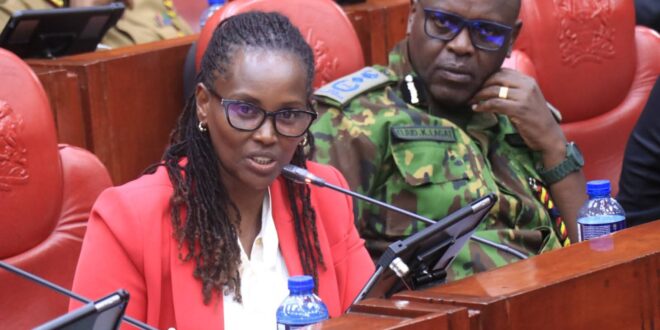
Members of Parliament have raised concerns over a proposed Sh1.9 billion allocation for police VIP protection and security of government installations, questioning its priority amid ongoing financial pressures in the country.
The National Police Service (NPS) defended the budget proposal before the National Assembly’s Departmental Committee on National Administration and Internal Security during discussions on the 2026/27 budget estimates.
Click here to join our WhatsApp Channel
Committee chairperson Gabriel Tongoyo (Narok West) challenged the justification for the allocation, noting that officers deployed to Parliament, the Judiciary, and other state institutions are typically funded through the budgets of those institutions.
He questioned why such a large amount had been set aside for VIP protection while many police stations across the country remain in poor condition.
In response, NPS Chief Finance Officer Arthur Nduati explained that the allocation was not entirely new, stating that it previously existed under the Critical Infrastructure Protection Unit.
He clarified that the bulk of the Sh1.9 billion—about Sh1.8 billion—would go toward salaries for newly recruited officers assigned to guard government facilities, while Sh66 million would cover operations and maintenance.
Lawmakers further sought explanations on an additional Sh5 billion to Sh6 billion earmarked for ward policing and police station operations, demanding clarity on how the funds would improve service delivery.
NPS Secretary for Administration and Accounting Officer Bernice Lemedeket also informed the committee that police officers had been moved from private insurance providers to the Social Health Authority’s Public Officers Medical Scheme Fund following a government directive issued on March 31.
The transition affects more than 140,000 officers and prison warders previously covered by insurers including APA Insurance, Britam, First Assurance, and Jubilee Insurance.

She said the new arrangement aligns with coverage offered to civil servants and teachers but acknowledged challenges in implementation.
Lemedeket further warned that inadequate funding continues to strain police insurance programmes, particularly group life cover that caters for injuries, death benefits, and funeral expenses, often delaying compensation to families.
For the first time, the service has also set aside Sh137.5 million to refurbish dilapidated police stations, while acknowledging a broader funding gap that includes over Sh2 billion needed for medical insurance and Sh8 billion for group life cover.
The committee was also informed that pending bills related to the planned police hospital had been fully provided for in the upcoming budget to enable its operationalisation.
Separately, Inspector General of Police Douglas Kanja appealed for support to modernise the police air wing, noting that the service currently operates only three aircraft.
He said the fleet includes two fixed-wing aircraft and one Mi-17 helicopter, while nine other aircraft remain grounded but could be restored with investment.
Kanja, accompanied by Deputy Inspector General Eliud Lagat and DCI Director Mohamed Amin, revealed that Sh102 million had been allocated to refurbish the Mi-17 helicopter and repair another aircraft.
He also urged the committee to support the purchase of two new fixed-wing aircraft to enhance policing operations, disaster response, and surveillance, saying the service is “almost starting from scratch” in terms of air capabilities.