The Lower Eastern Times Opening The Third Eye


The government has introduced enhanced Ebola surveillance measures at Jomo Kenyatta International Airport (JKIA) by designating Gate 16 for passengers arriving from countries classified as high-risk for Ebola transmission.
Public Health Principal Secretary Mary Muthoni announced the move following an inspection tour of the airport, noting that the measures were prompted by recent Ebola outbreaks reported in parts of the Democratic Republic of Congo and Uganda.
Click here to join our WhatsApp Channel
According to Muthoni, health authorities have intensified screening and monitoring at all six international arrival gates, with Gate 16 specifically reserved for travellers from affected regions.
She revealed that an isolation facility manned by port health officials has been established at the designated gate to enable quick action should any suspected Ebola case be identified. Additional isolation points have also been set up to support immediate assessment and management of travellers displaying symptoms associated with the disease.
As part of the strengthened screening procedures, all incoming travellers are now required to fill out online self-reporting forms detailing their recent travel history and current health condition. Officials say the information will assist in early detection of potential health risks.
Kenya has also adopted advanced disease monitoring through genomic sequencing. Port health officers are collecting waste samples from all aircraft arriving at JKIA for laboratory analysis, a process aimed at detecting disease trends and identifying possible threats, including Ebola, before they spread.
The samples are stored under controlled conditions at the port health clinic before being examined in national laboratories.
Muthoni assured Kenyans that no Ebola case has been reported in the country and emphasized that the government has put in place strict prevention and containment measures. She urged the public to ignore misinformation circulating online and instead rely on updates from the Ministry of Health.
The PS further disclosed that quarantine facilities have been prepared as part of Kenya’s emergency response plan, while severe or suspected Ebola cases will be referred to Kenyatta National Hospital for specialized treatment.
She called for closer collaboration among all agencies operating at border entry points, stressing that effective surveillance requires a coordinated multi-agency approach.
Muthoni also advised Kenyans to avoid non-essential travel to countries currently experiencing Ebola outbreaks until the situation improves.
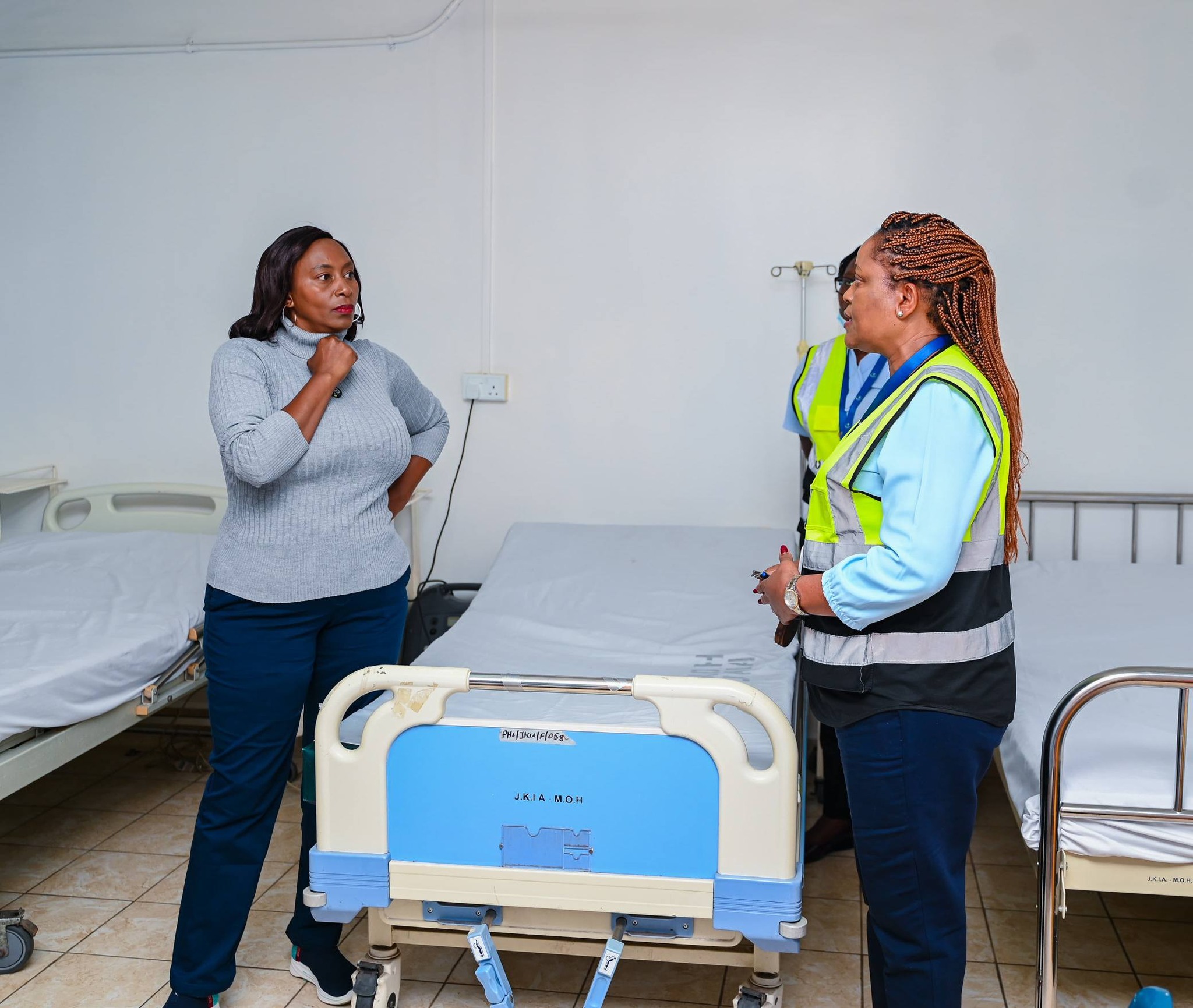
In addition, airport staff and border officials have received training on Ebola symptoms and response protocols, while authorities continue to work with airlines and affected countries to obtain passenger health information and exit screening reports.
The government maintains that the enhanced measures are intended to keep Kenya alert and well-prepared against Ebola and other public health threats.