The Lower Eastern Times Opening The Third Eye


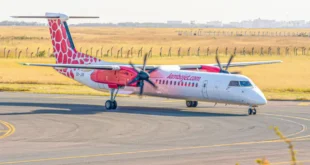
Kenya Airways (KQ) is looking to expand its fleet by 16 aircraft, increasing its capacity from the current 34 to 50 planes as part of a strategy to enhance both regional and international competitiveness.
Click here to join our WhatsApp Channel
CEO Allan Kilavuka said the expansion is key to covering fixed costs such as maintenance while cushioning the airline from global market shocks. Speaking on Capital FM’s Capital in the Morning show, he noted that the absence of a unified aviation strategy in Kenya has hindered KQ’s ability to perform at its full potential as a driver of national economic growth.
“We have the fundamentals for sustainable aviation, but African governments generally don’t see it as a central tool for economic development,” Kilavuka said. “We need aviation to be centralised around Kenya Airways—we are operating far below our capacity.”
He urged the government to establish a clear policy framework that positions aviation as a strategic pillar in the country’s development agenda. With better coordination and a strong central role for KQ, he said, Kenya could unlock more opportunities in tourism, trade, and regional integration.
Kilavuka pointed to Ethiopian Airlines—currently operating 156 passenger and cargo aircraft—as an example of how scale can be leveraged to dominate African air travel. Without a significant fleet expansion, he warned, KQ risks falling further behind its competitors.
READ ALSO: How to Become a Seller on Kilimall: Step-by-Step Guide
The fleet growth plans come as the airline works to build on its recent financial recovery. In the first half of 2024, KQ posted a profit after tax of Sh513 million—its first half-year profit since 2013—compared to a Sh21.7 billion loss in the same period in 2023.

The turnaround was attributed to a 22 percent jump in revenue, higher passenger numbers, operational efficiencies, and a stronger shilling.
Despite the improvement, the airline still faces negative equity, with liabilities exceeding assets. KQ continues to seek a strategic investor and is reportedly targeting up to USD 2 billion in new capital to stabilise and expand operations.