The Lower Eastern Times Opening The Third Eye
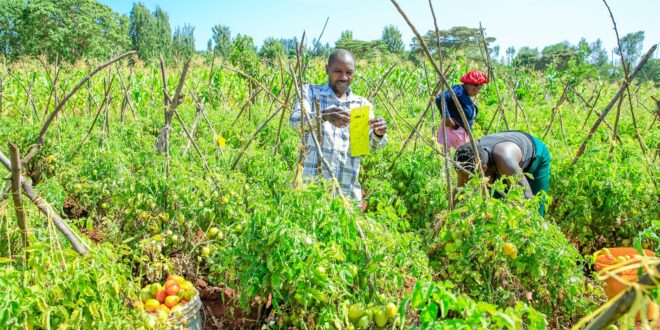
Tomato farmers in Kirinyaga County are increasingly embracing environmentally friendly methods to combat destructive pests, following a comprehensive training programme implemented across 11 tomato-growing wards.
The initiative has empowered farmers with hands-on skills in integrated pest management (IPM), helping them cut back on harmful synthetic chemicals while safeguarding their health, improving crop quality and protecting the environment.
Click here to join our WhatsApp Channel
The programme, led by Governor Anne Waiguru in collaboration with the International Centre of Insect Physiology and Ecology (Icipe), is part of the county’s broader strategy to modernise agriculture through science-based and farmer-focused solutions.
A major focus has been tackling tuta absoluta, commonly known as the tomato leafminer, a highly destructive moth that has significantly disrupted tomato farming. The pest accounts for more than 20 per cent of post-harvest losses and has developed resistance in both its larval and adult stages, making it harder to control and pushing many farmers to over-rely on agrochemicals.
Governor Waiguru noted that Kirinyaga remains Kenya’s top tomato-producing county, with output rising from 46,000 tonnes in 2017 to 116,000 tonnes currently, generating about Sh6.9 billion annually for farmers. As production grows, the county is prioritising safer farming methods to limit chemical exposure and ensure consumers receive clean, residue-free produce.
The training promotes biological pest control, proper farm hygiene, soil health management and the use of biopesticides instead of excessive chemical spraying. Farmers are also being introduced to non-chemical control techniques such as pheromone traps, soil testing and strict sanitation practices.
Pheromone traps, which use synthetic scents to mimic insects’ natural mating signals, help detect and reduce pest populations early, minimising or eliminating the need for chemical pesticides.
Click Here To Subscribe To Our YouTube Channel
Speaking during a training session in Nyangati Ward, Agriculture Executive John Gachara said the programme addresses the long-standing issue of overusing synthetic chemicals in tomato farming.
He said the county aims to gradually eliminate excessive agrochemical use to guarantee food safety and expand market opportunities for Kirinyaga’s produce. Through its partnership with Icipe, the county has already trained 1,000 farmers in leading tomato-growing wards on biopesticides and IPM techniques.
Gachara added that the initiative is part of a broader agricultural transformation agenda that also targets coffee, rice and other horticultural crops.

Icipe research officer Peterson Wachira said the county government played a key role in identifying the pest problem and organising farmer training through extension services. The organisation carried out a two-season demonstration involving 35 farmers using IPM compared to those practising conventional chemical-based farming.
The results showed that tuta absoluta can be effectively controlled using trapping, biopesticides and sanitation without exposing tomatoes to harmful chemicals, allowing farmers to harvest and consume clean produce directly from their farms.
Farmers say the training has delivered quick results. Lucy Wanjiku from Kanyekiine Ward said the programme helped reduce losses and production costs, noting that organic methods have lowered disease incidence and improved profits, with county support in providing inputs and pest traps.

Stephen Munene, who trained in Kithiriti, said the new approach has boosted yields and income, offering better returns than chemical fertilisers.
Njuki Mara from Nyangati Ward said reducing chemical use has brought both financial and health benefits, as conventional agrochemicals are costly and can pose health risks.
County officials maintain that the shift to integrated pest management is protecting farmers and consumers alike while reinforcing Kirinyaga’s status as a leading tomato producer through sustainable agricultural growth.