The Lower Eastern Times Opening The Third Eye
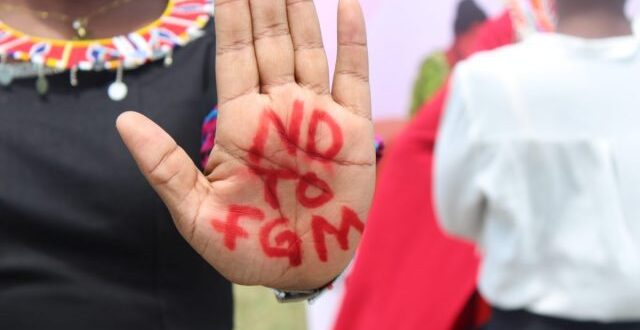
A recent report reveals that Female Genital Mutilation/Cutting (FGM/C) is being practiced in 94 countries worldwide.
Click here to join our WhatsApp Channel
The study highlights that the practice is more widespread than previously recognized, with more girls and women affected or at risk than earlier estimates suggested.
Titled “The Time Is Now: End Female Genital Mutilation/Cutting, An Urgent Need for a Global Response – Five Year Update,” the report was compiled by Equality Now, the End FGM European Network, and the U.S. End FGM/C Network.
The report identifies that FGM/C is found in communities in countries such as Azerbaijan, Cambodia, and Vietnam, with evidence of the practice also emerging in places like Colombia, Malaysia, the Philippines, Saudi Arabia, Sri Lanka, and the UAE. It also emphasizes the need for further investigation in regions like Panama, Mexico, and Peru, where FGM/C may occur among indigenous groups.
FGM/C is recognized globally as a severe human rights violation, involving the partial or complete removal of female genitalia for non-medical reasons. It stems from gender inequality and efforts to control women’s and girls’ bodies and sexuality.
The report asserts that FGM/C offers no health benefits and can lead to serious long-term and short-term health consequences, including infections, chronic pain, infertility, and even death, as demonstrated by fatalities in Sierra Leone and Kenya in 2024.
Despite its harmful effects, only 58 of the 94 countries where FGM/C is practiced have laws explicitly banning the practice. This lack of comprehensive legal frameworks leaves many vulnerable to its continuation.
Efforts to end FGM/C are often hindered by governments’ reluctance to take action, especially in nations not typically associated with the practice. Other challenges include inadequate legal protections, insufficient data, low public awareness, and a lack of international funding and commitment.
The report includes surveys, estimates, and testimonies from survivors and activists, emphasizing the urgent need for expanded protection and prevention efforts. Divya Srinivasan from Equality Now stressed the importance of a global response to the issue.
UNICEF’s 2024 figures estimate that over 230 million women and girls are affected by FGM/C globally, including 80 million in Asia and six million in the Middle East. This represents a 15% increase from previous estimates due to new data from countries previously excluded and rapid population growth in affected areas.
Tania Hosseinian of the End FGM European Network emphasized that accurate data is crucial for understanding the scope of FGM/C and crafting effective policies. The report aims to serve as a reference and advocacy tool in the global fight to end FGM/C.
The End FGM European Network, Equality Now, and the U.S. End FGM/C Network are key players in this ongoing effort, working to ensure sustainable action against FGM/C both in Europe and globally.