 The Lower Eastern Times Opening The Third Eye
Related Articles



New vehicle sales in Kenya increased by 12.2 per cent in the four months to April, supported by improved access to affordable credit and continued government leasing programmes, according to industry data.
The growth signals steady economic activity despite global uncertainties linked to geopolitical tensions in the Middle East, high operating costs, and subdued consumer demand.
Click here to join our WhatsApp Channel
Figures from the Kenya Motor Industry Association (KMIA) show that 11 major dealers sold 4,802 new vehicles between January and April, compared to 4,280 units during the same period last year.
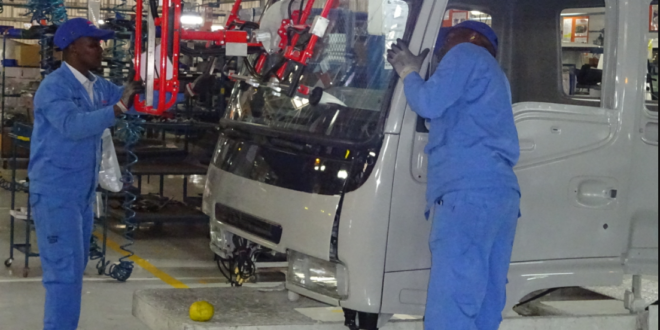
Most of the vehicles sold were Completely Knocked Down (CKD) units, which are imported in parts and assembled locally.
Isuzu East Africa led the market with 2,521 units sold, up from 2,077 last year, capturing 53 per cent of total sales. CFAO Mobility followed with 1,352 units, slightly higher than 1,303 last year, representing 28.2 per cent of the market. Simba Corporation came third with 395 units.
The strong performance has been attributed largely to lower borrowing costs following a series of Central Bank of Kenya (CBK) rate cuts. The base lending rate has dropped from 12 per cent last year to 8.75 per cent currently.
Bank lending to the private sector also improved, rising to 8.1 per cent in March 2026 from 7.4 per cent in February, after contracting earlier in 2025.
CBK data shows increased credit uptake in key sectors such as construction, trade, agriculture, and consumer goods, aligning with reduced interest rates.
Demand trends indicate that trucks were the most purchased vehicles at 2,102 units, followed by pickups at 1,394 units. Buses accounted for 695 units, while prime movers (heavy trucks) recorded 242 units.
KMIA noted that lower financing costs and improving business confidence were key drivers of growth in the sector.
Additional demand has been supported by government leasing programmes, school transport investments, and activity in infrastructure projects such as roads and housing.
Isuzu East Africa Managing Director Rita Kavashe said demand has been strong in logistics, retail distribution, agriculture, construction, and county-level operations, especially for 3.5 to 5-tonne vehicles.
She added that government projects, recovery in public transport, police and state purchases, and the return of economic activity after COVID-19 have also boosted demand for medium-duty vehicles.

The rollout of the new school curriculum has further increased demand for school buses, while election periods also typically drive purchases through constituency development funds.
Despite the growth in new vehicle sales, imported used cars still dominate Kenyan roads due to their lower prices, especially for saloon cars and SUVs.
Kenya imports between 7,000 and 9,000 used vehicles monthly, mainly from Japan, which accounts for about 80 per cent, as well as the United Arab Emirates, United Kingdom, Singapore, and South Africa.
