 The Lower Eastern Times Opening The Third Eye
Related Articles



By: Beatrice Nzambi, Jewel Technical Collage
Public discussion in Kenya has recently intensified over government expenditure, with particular focus on the operational costs of State House during President William Ruto’s administration.
Reports showing a sharp rise in spending have drawn comparisons with presidential offices in countries such as South Africa and Tanzania, prompting criticism from citizens, economists, and policymakers about whether the expenditure reflects responsible management of public funds.
Click here to join our WhatsApp Channel
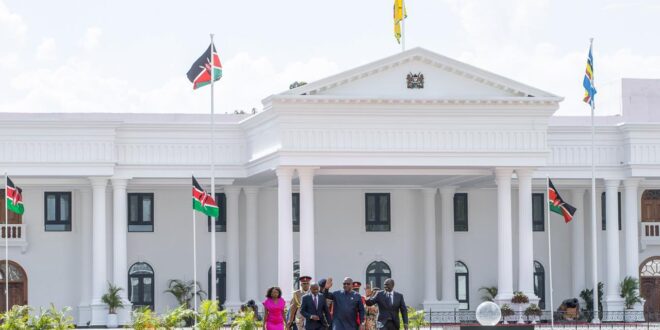
State House, located in Nairobi, serves as the official residence and administrative headquarters of the Kenyan president. It plays a central role in executive leadership and national functions. However, recent financial reports indicate that the cost of running and maintaining the facility has risen substantially under the current administration.
Treasury data shows that the State House was allocated about KSh7.7 billion for the 2025/2026 financial year. By January 2026, however, spending had already reached approximately KSh10.4 billion, surpassing the approved annual budget several months before the end of the financial year. This has raised concerns about fiscal discipline and the strength of budgetary controls within the executive arm of government.
The expenditure covers various operational costs, including staff salaries, local and international travel, hospitality, fuel, vehicle maintenance, and other administrative expenses. While these categories typically make up a large portion of government operational spending, critics argue that the current scale of expenditure appears unusually high when compared with regional standards.
Comparisons with other African countries have further fueled the debate. Estimates suggest that Kenya’s State House budget could rise to nearly KSh17 billion after supplementary allocations, potentially making it one of the most expensive presidential offices in the region. By comparison, South Africa’s presidential administration reportedly operates with a budget of around KSh7.8 billion, while Tanzania’s State House spending is estimated at about KSh1.7 billion.
Government supporters argue that the higher spending partly reflects expanded state functions and infrastructure development. The administration has reportedly increased the number of official state lodges across the country and initiated renovation works at State House facilities. Officials say these projects aim to modernize infrastructure and enhance the efficiency of presidential operations.
Renovation efforts at State House in Nairobi have reportedly involved structural improvements, office refurbishments, and modernization of key facilities. Government representatives maintain that such investments are necessary to maintain national institutions and support official and diplomatic activities.
Nevertheless, critics question the timing of the spending, especially as many Kenyans continue to face economic pressure. The country has been grappling with rising living costs, increased taxation, and growing public debt, making government expenditure a highly sensitive issue.
Economists warn that heavy spending on administrative offices could reduce resources available for essential sectors such as healthcare, education, and infrastructure. They stress that governments should prioritize spending that directly benefits citizens, particularly in developing economies where public resources are limited.
Public opinion has also amplified the debate. Civil society groups and several members of parliament have called for greater transparency and accountability in the use of public funds. Some lawmakers have demanded detailed explanations from the executive regarding the rising costs and the justification for supplementary budgets.
The issue reflects a wider challenge faced by many African governments: balancing the costs of running government institutions with the need to use taxpayer money responsibly. While presidential offices require adequate resources to function effectively, experts say strong oversight and transparent budgeting are critical to maintaining public confidence.
Overall, the discussion surrounding Kenya’s State House expenditure has highlighted the growing demand for fiscal accountability in governance. As citizens become more aware of how public funds are used, governments are likely to face increased scrutiny over their budgetary decisions.
Whether spending levels will remain the same or be revised in future budgets remains uncertain. What is clear, however, is that the debate has ignited a nationwide conversation about fiscal priorities, transparency, and responsible leadership in Kenya’s public sector.