The Lower Eastern Times Opening The Third Eye
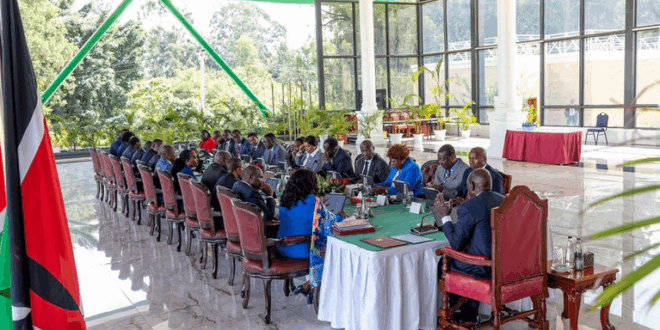
President William Ruto’s cabinet has approved plans to dual the 20.2-kilometre Nairobi Northern Bypass, marking a major step towards easing traffic congestion along the critical road.
Click here to join our WhatsApp Channel
In a statement released on Tuesday, June 24, 2025, the cabinet emphasised that expanding the bypass will help accommodate the increasing volume of vehicles using the route.
“The project will enhance traffic flow, improve safety, and provide better access to economic zones, industrial areas, and essential services across Nairobi and Kiambu counties,” the cabinet statement noted.
The project involves upgrading the existing single carriageway into a dual carriageway. It will also include the construction of eight interchanges, overpasses, underpasses, and non-motorised transport infrastructure such as pedestrian walkways, cycle lanes, better drainage systems, and improvements to nearby roads.
The Northern Bypass, which connects Ruaka in Kiambu to Ruiru and links both the Eastern and Western bypasses, remains Nairobi’s only single carriageway bypass and is notorious for heavy traffic, especially during peak hours. This results in delays, higher transport expenses, increased pollution, and reduced productivity.
In a related move to improve urban mobility, the cabinet also approved the Nairobi Railway City Central Station and Public Realm Project. This ambitious infrastructure initiative is expected to ease congestion in the capital and breathe new life into the city’s Central Business District.
According to the cabinet, the project will transform the current Central Station into a modern, multi-modal transport hub, making it a key pillar in attracting private investment to the Railway City development.
Projections indicate that passenger traffic could rise to 400,000 daily by 2030 and hit 600,000 by 2045.
The revamped station will feature nine platforms and upgraded access bridges capable of evacuating up to 30,000 commuters per hour.
In addition to the station, improvements to the surrounding public spaces are expected to unlock idle land, stimulate economic activity, and boost foot traffic into the city centre.
The project has secured funding to support major transport links, including Bus Rapid Transit (BRT) Line 3, new commuter rail services, and a standard-gauge railway connection to Jomo Kenyatta International Airport.
The government expects the project to spur job creation, support urban renewal, and promote sustainable development, positioning the new station as Nairobi’s central transport hub.