The Lower Eastern Times Opening The Third Eye

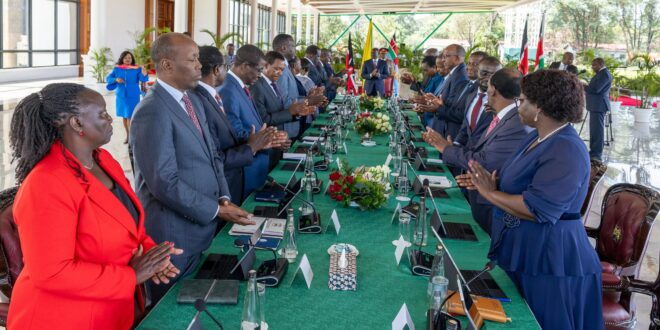
The Cabinet has given the green light to the second phase of the Higher Education, Science, and Technology Project, an initiative aimed at boosting the quality and relevance of STEM (Science, Technology, Engineering, and Mathematics) education in Kenya.
Click here to join our WhatsApp Channel
In a statement issued on Tuesday, the Cabinet led by President William Ruto stated that the project is designed to tackle persistent challenges in the sector, including inadequate infrastructure, a shortage of qualified lecturers, and minimal commercialisation of university research.
These issues have contributed to Kenya’s poor performance in the 2023 Global Innovation Index.
The project will focus on upgrading STEM infrastructure in public universities, establishing a Science and Technology Park, creating a National Physical Sciences and Research Laboratory, and developing a Centre of Excellence in Maritime Engineering.
It will also introduce Competency-Based Education and Training (CBET) at university level, alongside funding for postgraduate training of STEM lecturers.
The initiative seeks to strengthen collaboration with industry players and international universities while promoting short-term, skills-oriented training programs to boost youth employability in technical fields. A special emphasis will be placed on increasing women’s participation in STEM disciplines.
During the same Cabinet meeting chaired by President Ruto, several other key policies were approved.
Among them are the Affordable Housing Regulations, 2024, which form part of the government’s broader Bottom-Up Economic Transformation Agenda (BETA) and aim to make homeownership more accessible for Kenyans.
The new legal framework will streamline the implementation of affordable housing projects across the country, providing clarity and structure for developers and beneficiaries.
A notable reform under the new regulations is the reduction of the required housing deposit from 10 per cent to 5 per cent, making it easier for low and middle-income earners to purchase homes.
The regulations also ensure fair allocation of housing units across different income brackets, offer access to low-interest home loans, and provide structured deposit support for individuals unable to make upfront payments.
Additionally, the Cabinet approved the dualing of the 20.2-kilometre Nairobi Northern Bypass. The upgrade, which will transform the existing single carriageway into a dual carriageway, is expected to ease traffic congestion, enhance road safety, and improve access to economic centres, industrial hubs, and essential services in Nairobi and Kiambu counties.