The Lower Eastern Times Opening The Third Eye
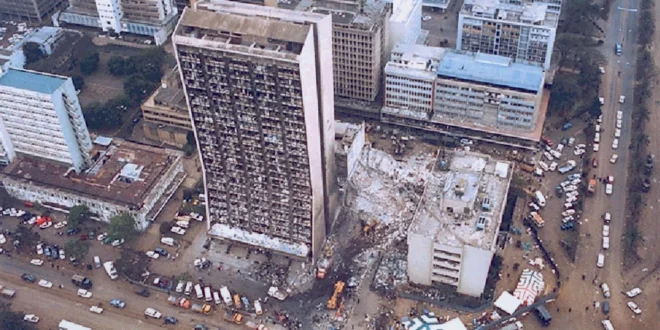
Survivors of the 1998 Nairobi bomb attack and their families have taken their case to the Court of Appeal, seeking justice and compensation after the High Court dismissed their petition.
The move comes after a 2024 ruling by Justice Lawrence Mugambi, who threw out the case filed in 2021, stating that the petitioners did not provide enough evidence to prove the government failed in its duty to prevent the attack.
Click here to join our WhatsApp Channel
While the applicants argued that authorities ignored early warnings and did not secure the country’s borders, the judge found that they did not meet the legal threshold required to hold the State accountable.
The appeal has been lodged by the Legal Advice Centre Kituo Cha Sheria together with several individuals acting on their own behalf, for deceased relatives, and for about 337 victims of the terrorist attack.
They are contesting the entire ruling, claiming the court made errors in both law and fact by failing to hold the government responsible for not averting the bombing.
In their appeal documents, the group argues that the High Court did not properly assess evidence suggesting that the State either knew or should have known about terrorist activities and the planned attack.
They maintain that the information presented went beyond general warnings, pointing to specific and actionable intelligence, including alerts from the US Embassy, the presence of terrorist cells, and earlier security operations targeting suspects.
According to the appellants, such intelligence should have prompted stronger preventive measures by the government.
They also fault the High Court for concluding that authorities had fulfilled their duty of care, insisting that repeated warnings were overlooked and adequate security steps were not taken.
The appellants argue that the ruling failed to acknowledge the State’s constitutional and international obligation to safeguard life, security, and human dignity, adding that this failure violated fundamental rights.
Click Here To Subscribe To Our YouTube Channel
Further, they contend that the government should still be held liable to compensate victims, even though the attack was carried out by non-state actors, citing international human rights standards that require states to protect citizens and provide redress when harm occurs.
They also claim that the government had created an expectation of compensation through past communication and engagement with victims, which the High Court allegedly failed to consider.

Additionally, the appellants argue that the court downplayed the extent of suffering endured by victims and their families, including loss of life, injuries, trauma, and economic hardship, and failed to award appropriate compensation.
They are now asking the appellate court to overturn the High Court’s decision and grant orders that will deliver justice, including compensation and other remedies.
The case stems from the 1998 bombing of the US Embassy in Nairobi, which left more than 213 people dead and over 4,000 injured.