The Lower Eastern Times Opening The Third Eye
By: BBC
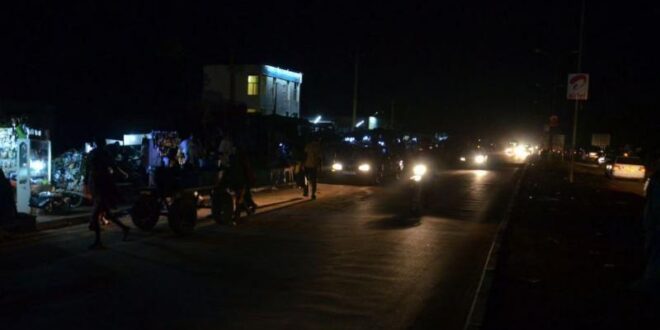
Chad, Guinea, Niger, Mali, and many other sub-Saharan African countries have been facing energy shortages for months.
According to a report by the International Energy Agency (IEA) published in June 2023, 567 million people in sub-Saharan Africa did not have access to electricity in 2021, which is more than 80 percent of all people in the world who did not have access to electricity.
On Monday, May 6, the people of Chad will vote to elect their leader for the next 5 years. While the campaigns are in full swing, the country is facing an unprecedented electricity problem.
In some neighborhoods of the capital of Chad, N’djamena, residents stayed for more than 2 months without electricity, in a hot environment where the temperature was around 45°.
The issue is in the campaign stages. The interim president and presidential candidate, for example, promised 24-hour electricity, seven days a week for everyone in Chad.
A similar promise was also made by Succès Masra, the Prime Minister and his main opponent. “When I was in government, I found out that 90 percent of the people of Chad have never seen electricity since independence. If I am elected president, I will end 60 years of darkness,” said the President of the Les Transformateurs party.
Chad, which has a policy of free water and electricity for a monthly consumption of no more than 300 kWh of electricity and 15 cubic meters of water, has not specifically explained the causes of the electricity crisis.
But according to the Thinking Africa Institute, the energy crisis in Chad is the result of technical and commercial mismanagement, causing a serious electricity problem.
Although the country has great energy potential such as solar, biomass, wind, geothermal and hydrocarbons, sources that can contribute to the development of the sector.
“Candidates make a lot of promises about access to electricity. But people don’t believe it. Chadians are busy finding ways to deal with the lack of energy. So they don’t take political promises seriously,” reported Maji Maji Odjitan, a BBC correspondent in Ndjamena.
Chadians seek alternative ways to deal with the heat, including going to the Bakara Seminary gardens, about fifteen kilometers from the center of N’djamena, to get some fresh air.
Sitting on a bench in the shade of a tree, Maryse says “having electricity in Ndjamena has been like a miracle”.
“I had to buy three solar panels, at least to have light in my house. But the electricity is not enough to turn on even the fan, let alone the air conditioner. At night, I spend a lot of time fanning the children so that they sleep well. The situation is very difficult,” says Manga Bosco .
Generator owners, on the other hand, face high fuel costs. Petrol increased from 518 to 730 francs per liter, a 40% increase, and diesel was increased to 828 francs instead of 700 francs, an 18% increase.
In an official statement to the media from the Prime Minister’s Office, it has been explained that this increase in oil prices is due to the fact that production in the oil refinery is low.
In Guinea, an explosion in the country’s main oil depot in December 2023 caused disruption of electricity production in Coronthie.
Since then, the country has experienced an energy crisis resulting in frequent blackouts. On Thursday March 14, 2024, a power outage plunged the capital into darkness and caused chaos in many neighborhoods.
In addition, there is a lack of water that affects the dams to produce electricity and the withdrawal of the Turkish electricity company Karpowership, which provided 10 percent of the total electricity needs in Guinea since December 2019.
In response to protests against the power cuts, the director general of the company Electricité de Guinée (EDG) and his two deputies were removed by the head of the junta, General Mamadi Doumbouya.
More than a month after this incident, Guinea decided to return to its neighbors, starting with Senegal, to get electricity from Senegal again.
“Since April 25, 2024, the channel to transfer 120 megawatts of electricity from Senegal (SENELEC) to the Société Électrcité de Guinée (EDG) has been opened,” announced the Ministry of Energy, in a press release published this Tuesday, April 30, 2024.
The ministry says they are continuing discussions with other countries in the region to find alternative solutions to the current energy situation.
The situation in Niger

The restoration of the Nigerian power line in Niger, has not changed anything. Nigeria, through the Kainji Dam, is Niger’s main supplier of electricity.
Following the revolution of July 26, 2023, Nigeria cut electricity to Niger. But right now, the line has been restored.
“The Nigeria line has been restored but the current situation is worse than what we experienced when the line was cut off. For more than 3 months, Niger has been experiencing blackouts. In some areas, electricity is available for only 4 to 5 hours a day. of extreme heat, the demand for electrical energy is increasing.
All 8 regions of the country are affected. But the regions of Dosso, Tillabery and Niamey are the most affected,” reports Mariama Soumana, BBC correspondent in Niger.
“We have very serious problems with access to electricity during this period of extreme heat. It is true that there are no protests in the streets against the power outage. But consumers are complaining a lot, especially on social networks,” says Mahaman Nouri, president of the Association for the Defense of the Rights of Electricity Consumers, (ADDC) of Niger.
In addition to the lack of electricity, there is also a lack of information about the outage.
“The user’s right to access information is being violated. We want clear information to allow users to make their own settings and organize themselves better. They must inform the customers,” insists Mahaman Nouri.
To alleviate the energy crisis, Nigerien electricity company (Nigelec) recently inaugurated a 30 megawatt (MW) plant. But the plant needs a lot of diesel.
But with all these problems, Niger plans to help the neighboring country of Mali which is also in a bad situation.
Niger to help Mali
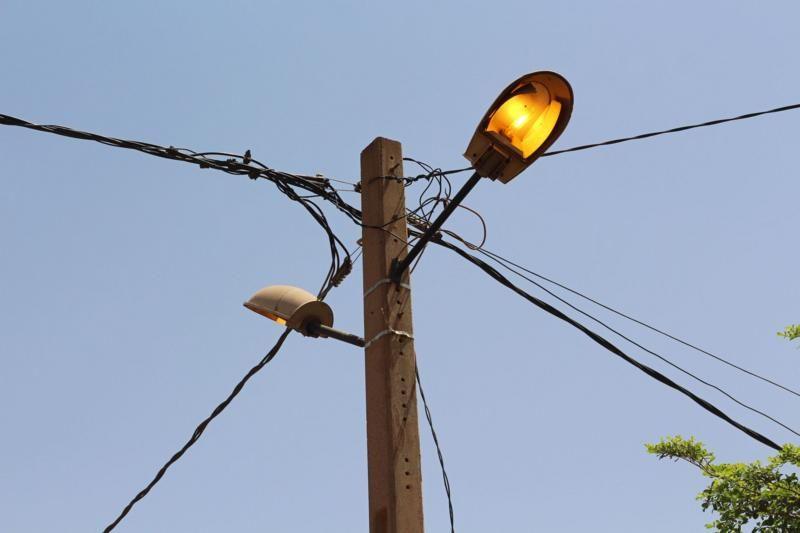
Nigerien Oil Company (SONIDEP) will supply 150 million liters of diesel. This is what we can remember in the statement of the president of Mali, Colonel Assimi GOÏTA of April 16 following a message from Niger led by its Minister of Oil, Mahaman Moustapha Barke.
This fuel will be used to power the power stations in Mali, to strengthen the power supply and to some extent reduce power outages.
“Mali is a brother and a friendly country. Last year, there was the first phase involving 22 million liters. We are working together to facilitate the distribution of these 150 million liters of diesel in Mali as soon as possible,” declared Mahaman Moustapha Barke.
In Mali, power cuts can last up to 18 hours a day. The problem is explained, on the one hand, it is the wear and tear of the machines and on the other hand, the difficulty in financing the purchase of fuel to run the power plants.
Recently, Bintou Camara, Mali’s Minister of Energy and Water, announced that the country will form a new partnership that will allow it to have improved mine structures and finance the purchase of fuel to supply power plants.
The Director General of the national electricity company announced that, in order to meet the electricity needs for the year 2024, it needs 500 million liters of fuel.
The company, which suffers from a debt of more than 200 billion FCFA (300 million euros), is increasingly finding it difficult to ensure access to electricity in the capital and other areas of the country.
Ghana does not have enough money
In Ghana, all sectors are affected by power outages. According to the International Energy Agency (IEA), 63% of Ghana’s electricity comes from natural gas.
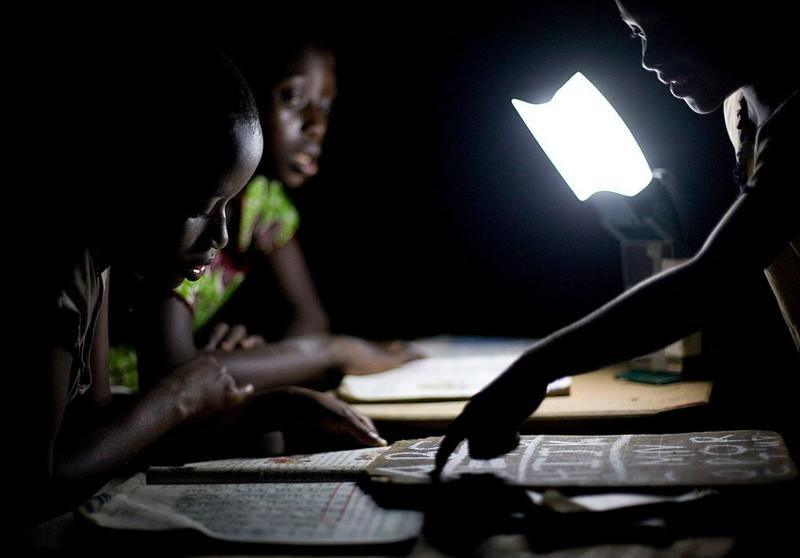
But the country has become more dependent on oil, currently does not have enough production of natural gas to supply its power stations and therefore has to import from abroad.
The difficulty of financing the purchase of fuel and the maintenance of poor electricity infrastructure has plunged the country, which aims to achieve 10% of electricity production from renewable energy by 2030, into a serious electricity crisis.
“The funds required for the purchase of fuel have not been available and therefore we have not been able to turn on the generators that require fuel,” explains Benjamin Boakye, an analyst at the Africa Center for Energy Policy.
Ghana has an electricity generation that does not meet the ever-increasing demand. Also, theft and illegal connection cause losses that can reach an average of 25% of electricity production.