The Lower Eastern Times Opening The Third Eye

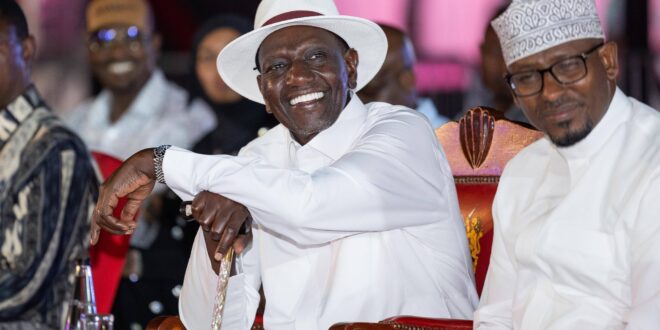
President William Ruto has defended the government’s decision to approve a proposed Ebola health facility at Laikipia Air Base, saying the move is rooted in Kenya’s long-standing health partnership with the United States and other international allies.
Speaking during a media roundtable in Wajir on Monday, Ruto said the facility forms part of broader efforts to strengthen global health security and enhance preparedness against infectious disease outbreaks.
Click here to join our WhatsApp Channel
According to the President, Kenya has already put in place extensive measures to respond to any potential Ebola threat, including surveillance systems, isolation centres, and treatment units.
Ruto explained that he approved the request after former U.S. President Donald Trump asked Kenya to support the initiative through a facility at Laikipia Air Base.
He noted that the decision was informed by decades of cooperation between Kenya and the United States in the health sector, particularly in combating diseases such as HIV/AIDS and Ebola.
The President highlighted the role of institutions such as Kenya Medical Research Institute (KEMRI), which participated in COVID-19 vaccine research, as evidence of the strong collaboration between Kenya and its international partners.
Ruto said the government has stepped up screening and monitoring operations across all border entry points, with approximately 3,000 travellers and transit passengers being screened daily.
He revealed that 23 counties have already activated emergency response systems and designated hospitals to manage any suspected Ebola cases.
The President emphasized that no person screened so far has tested positive for the disease, describing the country’s preparedness efforts as robust and effective.
He urged Kenyans to have confidence in the government’s ability to handle any potential outbreak and dismissed concerns over the country’s readiness.
Defending the proposed facility, Ruto argued that it is part of Kenya’s tradition of working with global partners on major health initiatives and should not be viewed as an unusual undertaking.

He cited previous collaborations during the COVID-19 pandemic, including international health facilities hosted in Nairobi, as examples of successful partnerships.
The President also noted that Kenya currently operates more than 20 specialized health facilities, including those at Kenyatta National Hospital, the Police Hospital, Moi Teaching and Referral Hospital, Thika Hospital, and Alupe Hospital, all of which contribute to disease surveillance and response efforts.
According to Ruto, these facilities are equipped to ensure early detection, isolation, and treatment of Ebola cases should any arise, helping prevent wider transmission.
He further pointed to Kenya’s involvement in regional peacekeeping and humanitarian efforts, particularly in the Democratic Republic of the Congo, saying such engagements increase the importance of maintaining a strong disease preparedness framework.
The President warned that the possibility of an Ebola case reaching Kenya cannot be ruled out, given regional movement and cross-border interactions.
He criticized leaders politicizing the issue, insisting that the government is handling the matter responsibly and based on expert guidance.
Ruto concluded by reaffirming the importance of Kenya’s partnership with the United States, noting that it has brought significant financial and technical support to the country’s healthcare system.
He said the Ebola preparedness strategy aligns with the government’s broader agenda of strengthening healthcare access and improving the country’s ability to respond to future public health emergencies.