The Lower Eastern Times Opening The Third Eye

Tanzanian President Samia Suluhu Hassan has officially launched implementation, monitoring, and acceleration tools for the National Development Vision 2050, marking a new phase in the country’s long-term development strategy.
Speaking at State House in Dar es Salaam, President Samia said the launch fulfilled a directive she had given on July 17, 2025, when she first unveiled the National Development Vision 2050 in Dodoma, instructing that supporting implementation and monitoring materials be developed at that time.
Click here to join our WhatsApp Channel
As part of the event, she held a special dialogue with private sector leaders and witnessed the signing of a Joint Declaration between the government and private sector aimed at strengthening accountability and collaboration in executing the Vision.
President Samia noted that the private sector is expected to drive roughly 70 percent of the Vision’s implementation, reaffirming the government’s commitment to fostering a conducive business environment and tackling existing obstacles. She said the government would continue working to create favorable conditions, resolve outstanding challenges, and ensure that the Vision’s goals translate into tangible benefits for citizens.
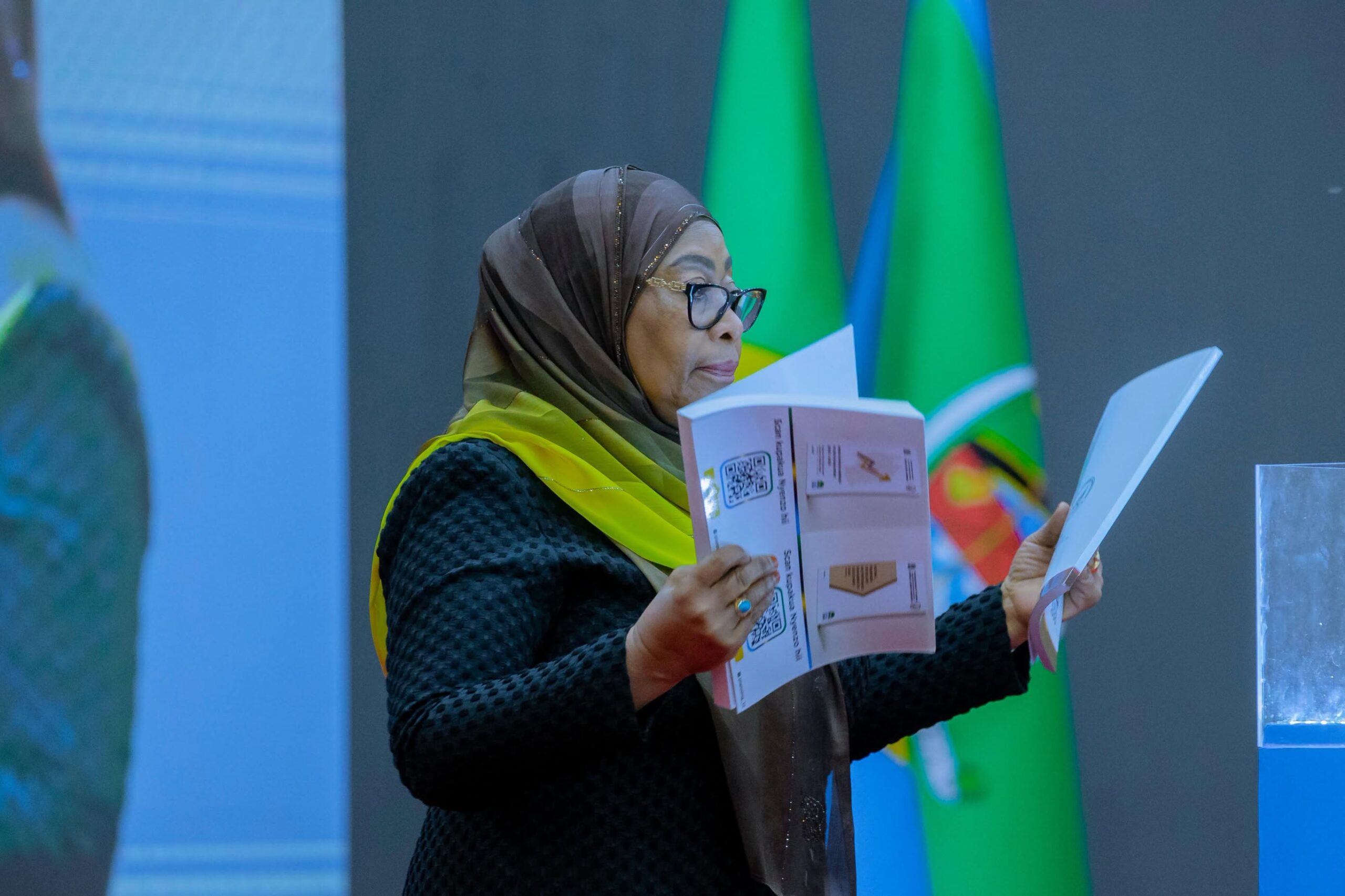
The President directed the President’s Office responsible for Planning and Investment, alongside other relevant authorities, to step up public education efforts around the Vision’s implementation. She also called on Tanzanians to uphold peace, unity, and stability to ensure the Vision achieves meaningful, lasting impact rather than remaining a mere policy document.

This development comes just days after Kenyan President William Ruto unveiled his own long-term development framework, Vision 2060, which he described as the successor to Vision 2030 and Kenya’s guiding roadmap for economic and social transformation over the next three decades. Ruto said the new blueprint aims to build on the achievements of Vision 2030 while positioning Kenya as a globally competitive, inclusive, and sustainable economy by 2060.

Ruto also announced the formation of an advisory team, led by Professor Hiroyuki Hino and Anyang’ Nyong’o, tasked with spearheading national consultations on Kenya’s long-term development agenda. According to the President, the process will bring together experts, policymakers, private sector representatives, academics, and ordinary citizens to help shape a shared national vision beyond the current Vision 2030 timeline.
The unveiling of Vision 2060 drew sharp criticism across Kenya’s political divide, though Ruto dismissed the pushback from opposition leaders and encouraged Kenyans to actively participate in shaping the country’s future direction. He argued that Kenya needed a new development blueprint, citing significant constitutional and institutional changes that have taken place since Vision 2030 was originally crafted.