The Lower Eastern Times Opening The Third Eye

President William Ruto has inaugurated the KenGen–Kaishan Green Ammonia Fertiliser Project in Olkaria, Nakuru County — a landmark initiative he described as a major stride toward agricultural independence, green industrialisation, and reduced reliance on imported fertiliser.
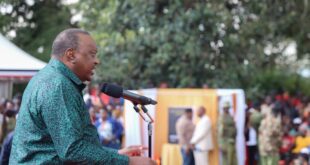
During the groundbreaking ceremony on Monday, Ruto said the venture reflects Kenya’s resolve to drive economic transformation by merging renewable energy, technological innovation, and industrial growth.
Click here to join our WhatsApp Channel
The facility, once operational, will produce up to 480,000 tonnes of fertiliser annually, ensuring farmers access to affordable, locally produced inputs while insulating the economy from global market volatility.
Highlighting Kenya’s heavy dependence on imports, Ruto noted that the country brought in over 600,000 tonnes of fertiliser in 2023, and an additional 443,000 tonnes worth nearly KSh60 billion in just the first half of 2025.
“Every shipment we import drains our Treasury and denies opportunities to Kenyans. Today marks a decisive shift toward self-sufficiency and economic resilience,” he said.
The president revealed that the Olkaria plant will utilise 165MW of geothermal power to synthesise green ammonia into fertiliser — the first project of its kind in Africa. Kenya, he added, possesses an untapped geothermal potential of nearly 10,000MW, though only about 1,000MW is currently in use.
According to Ruto, the facility will prevent over 600,000 tonnes of carbon dioxide emissions annually, comparable to removing 130,000 fuel-powered vehicles from Kenyan roads.
The Sh120 billion project is expected to create over 2,000 jobs and equip a new generation of professionals in geothermal energy, hydrogen production, and industrial technologies. It is also projected to yield $13 million (KSh1.7 billion) in annual profits for KenGen while unlocking opportunities in carbon credit markets.

Ruto said green fertiliser will boost Kenya’s competitiveness in global trade and strengthen its position as a leader in sustainable innovation.
He further stressed the need to expand the nation’s energy capacity from the current 2,300MW to at least 10,000MW within the next decade, to power industrialisation and meet rising demand.
To achieve this, Ruto said the government is prioritising public-private partnerships and establishing a National Infrastructure Fund to finance critical projects in energy, transport, and water sectors.
The president also outlined broader development goals, including the construction of 50 mega dams to irrigate 2.5 million acres of farmland, cutting the KSh500 billion annual food import bill, as well as plans to dual 1,000km of highways and pave 10,000km of rural roads.
“This is the scale of our ambition — to build a modern, food-secure nation anchored on world-class infrastructure,” he said.