The Lower Eastern Times Opening The Third Eye
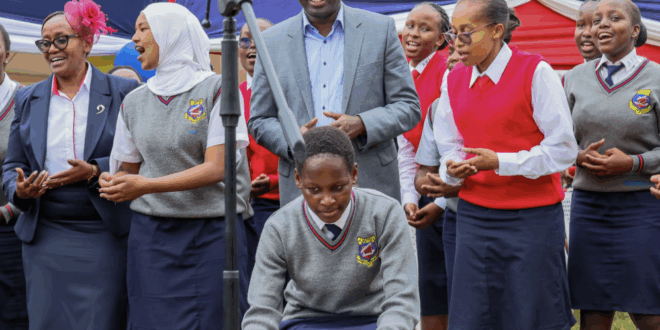
Education Principal Secretary Julius Bitok has reassured the public that the government remains committed to offering free education, dismissing any suggestion that the policy might be scrapped.
Click here to join our WhatsApp Channel
Speaking during a prize-giving ceremony at St Thomas Girls Secondary School in Kilifi County on Friday, Bitok stated that the Ministry of Education would work with Parliament to increase budgetary support for capitation and examination expenses.
“I want to make it clear that the government’s stance on free primary and secondary education remains unchanged. We will continue funding education through capitation, as we have consistently done over the years,” he said.
Bitok admitted that the education sector is under increased pressure due to rising demands, but emphasized that the government is intensifying efforts to ensure all learners benefit from available resources, particularly capitation.
His comments followed Treasury Cabinet Secretary John Mbadi’s statement to the National Assembly’s Education Committee that the government would only be disbursing Sh16,900 per secondary school learner annually—well below the Sh22,244 initially promised.
“We must be honest with ourselves. The budget cannot accommodate Sh22,000 per learner. The government simply does not have the financial capacity to fully fund free primary and secondary education,” Mbadi told MPs.
This shortfall of Sh5,344 means that parents will be required to cover the gap, placing additional strain on already overstretched household budgets.
Mbadi also disclosed that the actual number of learners in public schools is much higher than previously estimated and ruled out any immediate increase in capitation rates, citing budget limitations.
Currently, the capitation stands at Sh1,420 for primary pupils, Sh15,042 for junior secondary students, and Sh22,244 for senior secondary learners. Mbadi explained that due to tight fiscal constraints and shifting priorities, reviewing these figures may not be feasible in the short term, though adjustments could be made if revenue collection improves.
Appearing alongside Education CS Julius Ogamba before the House committee, Mbadi acknowledged there was underfunding in several education programs, which could be addressed depending on future revenue performance.
The announcement sparked criticism from lawmakers who accused the government of backtracking on its commitment to free education and misleading the public.
However, Bitok came to Mbadi’s defense, stating that his remarks had been misunderstood.
“What he highlighted—and what we emphasize—is the urgent need for deeper collaboration with Parliament to ensure that education funding keeps pace with the needs of our learners,” he clarified.
The funding cuts come despite the Education Ministry receiving the largest share—Sh702.7 billion—of the Sh4.239 trillion 2025–2026 national budget.
The development caught many schools off guard, as their budgets were based on the higher Sh22,244 capitation. As a result, several schools are now grappling with severe financial constraints, with some sending students home, reducing activities, or launching fundraising drives to remain operational.