The Lower Eastern Times Opening The Third Eye
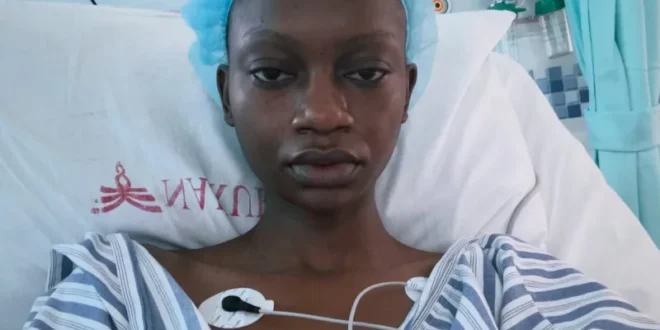
TV presenter and social media influencer Natalie Githinji has appealed to the public for financial assistance as she continues her recovery from surgery related to stage 4 endometriosis.
Still recuperating from the procedure, Natalie described the financial toll of managing the condition as overwhelming and called for stronger support systems for women living with endometriosis. In an Instagram post, she asked anyone who could help her understand how to petition for endometriosis and women’s reproductive health to be covered under the Social Health Authority (SHA) to reach out to her via email.
Click here to join our WhatsApp Channel
She also appealed to businesses and corporates interested in marketing collaborations, offering to promote them on her Instagram stories in exchange for support toward her treatment costs, and shared her business email for interested partners.
Natalie opened up about the severity of her condition, explaining that stage 4 endometriosis is the most advanced form of the disease, characterized by widespread deep tissue growths, large ovarian cysts known as endometriomas, and thick scar tissue capable of binding pelvic organs together — sometimes resulting in what’s known as a “frozen pelvis.”
She revealed that she had recently been discharged from the ICU and was still recovering from surgery, noting that she had not yet fully regained her physical, mental, and emotional stability.
According to the World Health Organization (WHO), endometriosis affects roughly 10 percent of women and girls of reproductive age globally — an estimated 190 million people. The condition develops when tissue resembling the uterine lining grows outside the uterus, often causing severe menstrual pain, heavy bleeding, chronic pelvic pain, bloating, nausea, and in some cases, infertility. While it typically affects the pelvic region, the tissue can also appear in other parts of the body, including the abdomen, chest, and lungs.
Women affected by the condition may experience pain during intercourse, bowel movements, or urination, and the chronic symptoms can take a toll on mental health, sometimes contributing to depression and anxiety. There is currently no cure for endometriosis; treatment instead focuses on managing symptoms and limiting long-term effects, though access to early diagnosis and effective care remains limited in many parts of the world.
In an earlier Instagram post on July 24, Natalie disclosed that she had lived with the condition for 17 years and appealed directly to President William Ruto to support a national awareness campaign. She urged the government to consider including comprehensive endometriosis care under SHA, noting that for many patients, the financial burden of consultations, surgery, medication, and ongoing treatment can be just as difficult to bear as the disease itself.
Having endured the pain and trauma associated with the condition for years, Natalie has increasingly used her public platform to advocate for women facing similar struggles. Her latest appeal has sparked renewed calls for greater public awareness and a broader national conversation on endometriosis, with many Kenyans highlighting the difficulties patients face in accessing diagnosis and treatment.

Some social media users expressed hope that the topic would be raised at an upcoming health forum at KICC, arguing that endometriosis deserves to be treated as a national health issue. US-based Kenyan influencer Malcom echoed this sentiment, stressing that the condition should not remain a silent struggle in the country. Citing a document tabled in Parliament by the Ministry of Health, he noted that Kenya has only about 700 gynaecologists — both public and private — serving an estimated 15 million women aged 15 to 49, translating to roughly one gynaecologist for every 21,000 women of reproductive age. He warned that women in rural areas may face an even greater burden due to limited access to early diagnosis and specialized reproductive healthcare, with many unaware they even have the condition and often told simply to endure the pain with painkillers.
The conversation has also gained traction in mainstream media, with several broadcasters weighing in on the need for greater awareness. Homeboyz presenter Tony Kibz noted that many people suffer in silence, and the issue only gains visibility because of public figures like Natalie. Musician Fena Gitu described the cyclical nature of the condition, noting that sufferers often experience only a handful of pain-free days each month before the trauma resumes. Laura Mbatha, Natalie’s co-presenter on NTV, shared that she has witnessed the struggle firsthand and described it as far from easy, having remained close to Natalie throughout her recovery — offering emotional support while keeping the public updated on her progress.