 The Lower Eastern Times Opening The Third Eye
Related Articles



As major African democracies explore the role of Artificial Intelligence in modernising their electoral systems, Kenya is emerging as a key player in the shift.
Click here to join our WhatsApp Channel
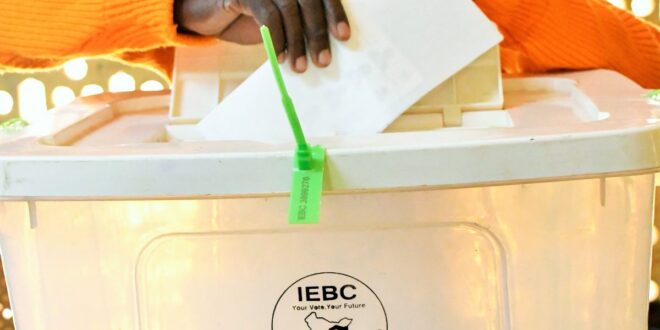
With its next general election less than two years away, Kenya’s Independent Electoral and Boundaries Commission (IEBC) is actively engaging stakeholders to understand how AI, social media, and digital tools can improve election management.
Speaking at a February forum hosted by the Electoral Law and Governance Institute for Africa, IEBC CEO Marjan Marjan stressed the importance of leveraging AI while remaining cautious of its potential risks. He called for Africa to develop its own capabilities and regulatory frameworks to ensure AI serves the continent’s interests.
Elgia Executive Director Felix Odhiambo welcomed the African Union’s decision to craft guidelines for AI in development. However, he warned that AI must be guided by strong ethical and legal systems to prevent misuse.
Kenya has already experimented with AI. During the 2022 elections, the IEBC used a WhatsApp bot to share election-related information and detect duplicate voter registrations. It also collaborated with the International Foundation for Election Systems to track hate speech online.
Marjan shared these insights at the annual conference of the Information Systems Audit and Control Association (ISACA) Kenya Chapter in April.
Nigeria Also Moves Towards AI
Nigeria is also taking steps in the same direction. In May, its Independent National Electoral Commission (INEC) set up a dedicated AI Division within its ICT department. The commission framed this as a response to evolving digital demands in election administration.
While some tech and governance experts praised the move as progressive, civil society voices raised concerns about Nigeria’s readiness for such a leap. Comrade Asuzu of the Nigeria Labour Congress argued that the country should first address issues of basic electoral credibility before embracing AI.
He pointed to public distrust in INEC, especially after the contested 2023 general elections, many of which ended in court. NGO Yiaga Africa reported that Nigeria’s voter turnout has steadily declined—from 69.1% in 2003 to just 27.1% in 2023—citing a mix of political and systemic challenges.
Yiaga Africa, in its newsletter The Ballot, acknowledged INEC’s AI initiative as a major innovation but questioned whether technology alone can ensure electoral transparency.
INEC official Sam Olumekun said the AI Division would support better decision-making, risk assessment, and voter engagement, all aimed at enhancing election credibility through smart data tools.
Cybersecurity expert Destiny Young echoed this optimism, calling the development a major step toward smarter, more reliable elections, and predicting that 2027 could be a pivotal year for tech-driven democracy in Nigeria.
