The Lower Eastern Times Opening The Third Eye
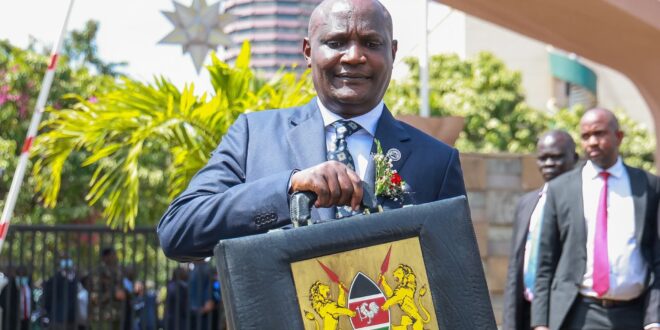
Treasury Cabinet Secretary John Mbadi has proposed an allocation of Sh405.1 billion to county governments for the 2025/26 financial year.
Click here to join our WhatsApp Channel
This amount constitutes 25.79% of the nationally collected revenue for the 2020/21 fiscal year, based on the latest audited financials.
The proposed allocation marks an increase of Sh17.6 billion compared to the Sh387.4 billion given to counties in the 2024/25 financial year.
In the budget estimates presented to Parliament, CS Mbadi included an additional Sh9.95 billion in conditional allocations from the national government’s revenue share. Furthermore, counties will benefit from Sh56.91 billion in conditional grants provided by development partners.
The total shareable revenue stands at Sh2.835 trillion, with the national government allocated Sh2.419 trillion.
While presenting his first budget since assuming office, Mbadi emphasized the government’s dedication to economic revitalization, in response to citizens’ expectations.
“I am fully aware of the hopes Kenyans have placed on this office. This budget reaffirms our commitment to policies that will drive economic recovery,” he stated.
He highlighted that Kenya’s economy grew by an average of 5.2% during the 2023/24 period—exceeding both the global average of 3.3% and Sub-Saharan Africa’s 3.8%.
Mbadi also underscored the enhanced involvement of the public in policymaking, especially during the budget formulation process.
Under the equitable share allocation, counties will receive varying amounts, including:
- Highest allocations: Nairobi (Sh21.1 billion), Turkana (Sh13.8 billion), Kakamega (Sh13.6 billion), and Nakuru (Sh14.3 billion).
- Mid-range allocations: Kisii (Sh9.7 billion), Machakos (Sh10 billion), Mombasa (Sh8.2 billion), and Kisumu (Sh8.8 billion).
- Lower allocations: Lamu (Sh3.4 billion), Tharaka Nithi (Sh4.6 billion), and Samburu (Sh5.9 billion).
In addition to budgetary allocations, the government has made major strides in education reform, including addressing uncertainties surrounding the Competency-Based Curriculum (CBC).
Acknowledging past concerns about unrealistic fiscal planning, Mbadi stated, “To respond to these issues, we adopted a zero-based budgeting approach and adjusted our revenue forecasts to reflect realistic trends.”