 The Lower Eastern Times Opening The Third Eye
Related Articles



By: Mercy Visikwr, MKu
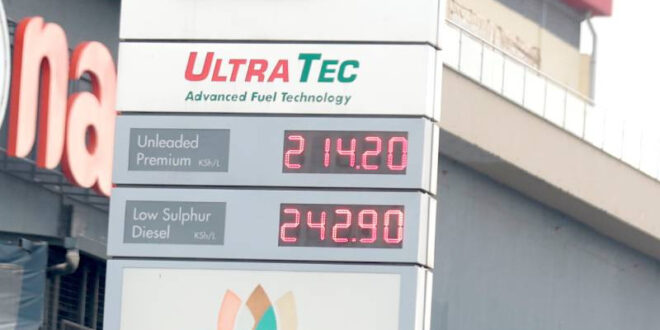
Kenyan households and businesses are increasingly feeling the pressure of rising fuel prices, with the effects being felt in both urban and rural areas. The steady increase in fuel costs has contributed to a higher cost of living, forcing many families and enterprises to adjust their budgets and operations.
Fuel remains a critical driver of Kenya’s economy, powering transport, agriculture, manufacturing, and numerous business activities. As fuel prices climb, the impact extends far beyond petrol stations, affecting the prices of goods and services across the country.
Transport operators have been among the hardest hit. Matatu operators, bus companies, boda boda riders, and freight transporters are grappling with increased operating expenses. To remain viable, many have raised fares and delivery charges, costs that are ultimately passed on to consumers.
The ripple effects are also being felt in the agricultural sector. Farmers and traders transporting produce from rural regions to major markets are spending more on logistics, leading to higher prices for food commodities such as vegetables, fruits, and cereals.
As a result, many households are now allocating a larger share of their income to food and transport expenses, leaving less money for other essential needs including education and healthcare.
For many Kenyans, the financial strain is becoming increasingly difficult to manage. Nairobi-based office worker Mary Wanjiru says her commuting expenses have nearly doubled over the past two years, reducing the funds available for school fees and other household obligations.
Similarly, Peter Muriuki, a vegetable trader in Nyeri County, says escalating fuel costs have significantly eroded his profit margins. According to him, many consumers blame traders for high food prices without recognizing the role transport costs play in moving produce from farms to markets.
Small and medium-sized businesses are also facing mounting challenges. Retail outlets, salons, food vendors, and other local enterprises report reduced customer spending as consumers prioritize basic necessities. Larger firms are dealing with increased production and distribution costs, forcing some to raise prices, scale back operations, or delay expansion projects.
Despite the challenges, economic analysts maintain that long-term investments in public transport systems, renewable energy solutions, and local production capacity could help reduce Kenya’s dependence on fuel and cushion consumers from future price shocks.
As global energy markets remain unpredictable, experts emphasize the need for policies that support affordable energy, economic resilience, and social welfare. They note that the issue extends beyond the price of fuel itself, touching on livelihoods, business sustainability, and the overall well-being of millions of Kenyans.