The Lower Eastern Times Opening The Third Eye
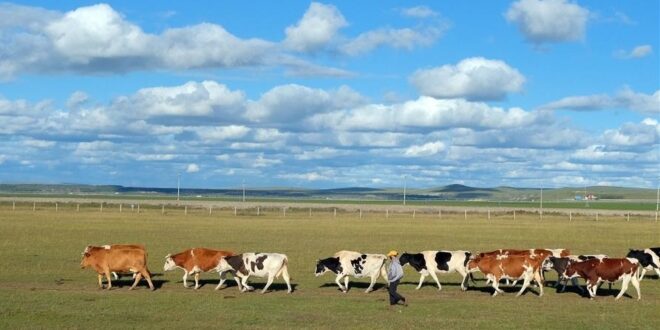
The government is rolling out new technology to accelerate a nationwide livestock vaccination drive targeting 22 million cattle and 50 million sheep and goats.
Central to the initiative is the Mifugo 360 digital platform, which registers farmers and allows them to access subsidised veterinary services through an electronic voucher system.
Click here to join our WhatsApp Channel
Under the Foot-and-Mouth Disease (FMD) programme, farmers contribute Sh50 per animal, with the government topping up Sh110 through an e-subsidy. Previously, farmers paid the full Sh160 per animal, a cost that locked out many small-scale livestock keepers.
Livestock are also being digitally registered using muzzle recognition technology, which identifies animals through their unique muzzle patterns. This marks a major shift from traditional branding and ear tagging methods that have long been used.
Digitally capturing an animal’s muzzle offers several advantages, including accurate and reliable data that provides farmers with timely information. Unlike branding and tagging, which can be altered and are costly to maintain, muzzle-based records are difficult to tamper with.
The technology also improves traceability, strengthens disease monitoring and helps curb livestock theft. According to livestock expert and former Kenya Animal Genetic Resource Centre (KAGRC) managing director David Kios, the system assigns each animal a unique identity, making tracking easier and more effective for disease control and surveillance.
Click Here To Subscribe To Our YouTube Channel
The vaccination campaign is being implemented through a partnership involving the government, private sector players and the World Bank under the National Value Chain Development Project (NAVCDP). It has so far been rolled out in 11 counties, including Bomet, Narok, Meru, Kiambu, Uasin Gishu, Laikipia, Kajiado and Bungoma.
The programme aims to achieve 70 per cent vaccination coverage within four years, the level required to effectively contain FMD. By November 27, 2025, about 40,000 farmers and 250,000 cattle had been registered, with 185,719 animals already vaccinated.
Officials say technology is key to meeting these ambitious targets, as the digital system offers the speed and efficiency needed to reach millions of animals. Beyond vaccination, the project is also being used to modernise livestock management as part of a broader strategy to unlock the sector’s potential.
Accurate data is seen as a game-changer in transforming the livestock subsector. In addition to assigning unique identities to animals, the platform links each animal to its owner, improving monitoring and accountability. The tracking feature also helps deter theft, especially in regions affected by cattle rustling and banditry.
The system is further designed to integrate services such as health records, access to finance and market linkages. Ultimately, the goal is to raise farmers’ incomes and create more structured and reliable markets.
Bungoma County deputy director of veterinary services Joseph Ganda says the adoption of technology will enhance service delivery to livestock farmers while speeding up the vaccination exercise.

The transition begins with veterinary officers registering farmers, capturing their details and scanning animals’ muzzles. Once the data is recorded, farmers receive an e-voucher on their phones, which they redeem when animal health officers administer vaccines against diseases such as FMD.
The digital approach represents a major step in shifting livestock management and disease control from manual to modern systems. By tracking health, vaccination history and ownership, the platform supports disease control, market access and widespread immunisation, leading to healthier herds.
Bungoma NAVCDP coordinator Rebeccah Lusweti says the system will significantly modernise livestock management and improve disease control. She notes that muzzle technology allows for the delivery of customised services tailored to individual farmers.
Overall, digitising livestock management supports Kenya’s ambition to grow the subsector’s contribution to economic development. Livestock currently adds about Sh1.4 trillion to the economy each year and employs roughly half of the agricultural workforce.

The vaccination drive seeks to raise the sector’s contribution to the economy from 12 per cent to 20 per cent by 2027. By improving animal health and safeguarding the dairy and meat industries, the initiative aims to boost production, strengthen livelihoods, enhance food security and create jobs.
Kenya’s milk production stands at about six million litres annually, falling short of the seven million litres consumed locally, with the deficit met through imports. The vaccination programme is also expected to reduce farmer losses, estimated at up to Sh62 billion each year.
Like the fertiliser subsidy programme, the reduced vaccination costs align with the Kenya Kwanza administration’s Bottom-Up Economic Transformation Agenda (BETA), which focuses on improving livelihoods, lowering production costs and expanding job opportunities in agriculture.