The Lower Eastern Times Opening The Third Eye

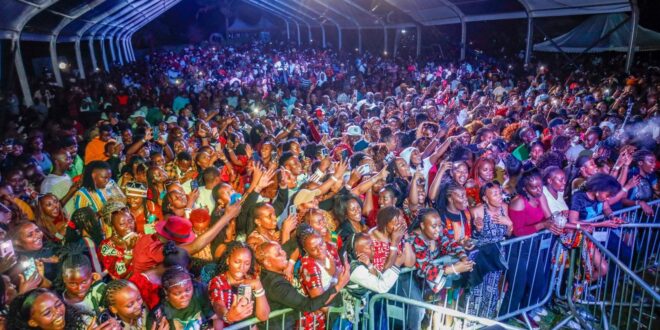
During the recently held Mataha Festival, media personality Sadra Shiku found herself reflecting on a troubling social reality that’s often ignored — the quiet disappearance of the Kikuyu boychild from spaces of celebration, progress, and empowerment.
Click here to join our WhatsApp Channel
In a candid Facebook post that has since sparked widespread debate, Shiku shared her observation: at nearly every Kikuyu cultural or music event, the crowd is overwhelmingly female.
“The crowd is mostly women,” she wrote. “And honestly, good for them. They’ve been empowered, they’re earning, and they can afford to show up. But where is the Kikuyu boychild?”
According to Shiku, the problem runs deeper than just attendance at events. It’s a reflection of a broader social imbalance — one where the girl child has been actively supported, encouraged, and empowered, while the boychild has been left behind, often with no safety net or system to uplift him.

She noted that attending a typical Kikuyu festival can cost upwards of Sh15,000 — factoring in tickets, transport, attire, and refreshments. “Girls pull it off easily for some reasons,” she said, implying that women have found their footing economically and socially.
Click Here To Subscribe To Our YouTube Channel

For the young men, however, the story is different. Many, she observed, can’t afford such events and instead gravitate toward cheaper forms of entertainment — miraa bases, muguka dens, or low-cost drinking spots — not out of choice but out of necessity.
“Most of them go to Muguka and Miraa bases. Cheap, harsh drinks in dingy corners. I understand sio kupenda kwao, but because that’s what their pockets allow,” she lamented.
Shiku pointed out that the imbalance stems from years of societal focus on empowering the girl child — a noble and necessary effort that, unfortunately, left the boychild without equal support.
“Society keeps shouting about empowering the girl child, but somewhere along the way, the boy was forgotten. Nobody taught him how to stand on his feet. Nobody cushioned him. Nobody checked on him,” she wrote.

She further highlighted the struggles faced by young men in the job market, where women are often preferred — sometimes unfairly — leaving the boychild feeling disadvantaged before even stepping into an interview room.
The result? A generation of men battling silent frustration, economic pressure, and social invisibility.
“The Kikuyu boychild is drowning silently in neglect and financial frustration. He’s not lazy. He’s not weak. He’s just unseen. Unempowered. Uncelebrated,” Shiku concluded.

Her post has ignited an important conversation about gender balance — not in opposition to empowering women, but in acknowledging that true progress requires uplifting both genders equally.
As more voices join the discussion, one thing is clear: the plight of the Kikuyu boychild — and indeed the Kenyan boychild — can no longer be ignored. It’s time to bring him back into focus.