 The Lower Eastern Times Opening The Third Eye
Related Articles



Kenya’s inflation rate remained unchanged at 4.6 per cent in October 2025, as a marginal drop in prices of key food commodities helped cushion consumers from rising costs in other sectors, according to the latest report by the Kenya National Bureau of Statistics (KNBS).
The cost of living edged up by 0.2 per cent month-on-month, driven mainly by the food and non-alcoholic beverages category, which recorded a similar 0.2 per cent rise.
Click here to join our WhatsApp Channel
Year-on-year, however, food inflation remained elevated at 8 per cent, reflecting persistent pressure on household budgets.
“The overall Consumer Price Index increased from 146.56 in September to 146.84 in October 2025, resulting in a monthly inflation rate of 0.2 per cent,” KNBS stated.
The report shows that prices of household staples such as maize flour and sugar declined slightly, while fresh produce and animal products became more expensive, leaving the overall food basket stable.
A two-kilogram packet of sifted maize flour dropped by 2.3 per cent to Sh148.79, while fortified maize flour fell 2.2 per cent to Sh168.56. Prices of kale (sukuma wiki) and beans dipped 1.0 per cent and 0.6 per cent, respectively, while sugar fell 0.5 per cent to Sh184.35 per kilo.
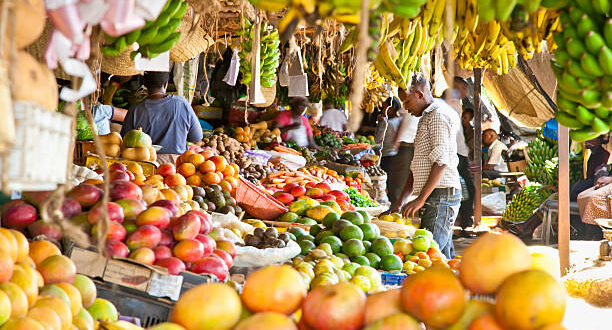
On the other hand, tomatoes, cabbages, and potatoes saw price increases of 1.2 per cent, 1.4 per cent, and 1.6 per cent, respectively, with oranges posting the steepest jump—up 4.2 per cent to Sh115.54 per kilo.
Non-food items also contributed to the slight uptick in living costs. Electricity tariffs rose by 3.0 per cent for 200 kWh consumption and 3.3 per cent for 50 kWh users, reaching Sh5,764.15 and Sh1,315.80, respectively.
Click Here To Subscribe To Our YouTube Channel
However, fuel prices remained stable at Sh185.59 per litre for petrol and Sh172.64 for diesel, helping contain broader inflationary pressures.

KNBS said inflation remains under control, supported by steady energy and transport costs. It attributed the bulk of inflationary pressure to food, transport, and housing, which together make up over half of the consumer spending basket.
Core inflation, which excludes volatile food and fuel prices, eased to 2.7 per cent from 2.9 per cent in September, indicating stable underlying price trends.
Despite the modest decline in some food prices, many households continue to face a high cost of living, with year-on-year price surges for essentials such as tomatoes (37.3%), sugar (22.6%), and cabbages (20.3%).