The Lower Eastern Times Opening The Third Eye

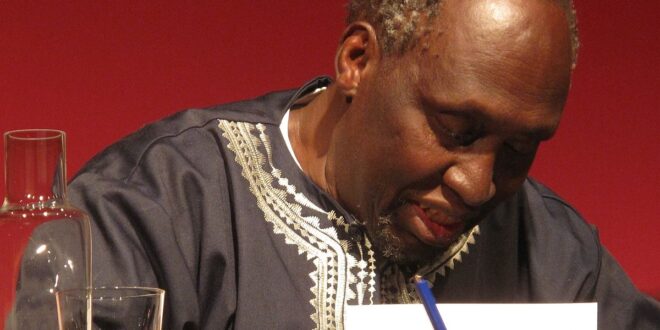
Kenyan literary icon, academic, and activist Ngũgĩ wa Thiong’o passed away on Wednesday, May 28, 2025, with his family describing his life as one well-lived and full of purpose.
Click here to join our WhatsApp Channel
Widely regarded as Kenya’s most significant author and one of Africa’s foremost literary figures, Ngũgĩ produced a vast body of work—ranging from novels and plays to essays and memoirs—that delved into the complexities of colonialism, independence, culture, and language in African societies.
Born in Limuru in 1938, Ngũgĩ gained international acclaim for his unflinching critique of colonial and post-independence systems.
His decision to write in Gikuyu rather than English was a defining moment in his career, signaling a firm commitment to cultural authenticity and resistance against linguistic imperialism.
READ ALSO: Kenyan Writer Ngugi wa Thiong’o Dies at 87
Early Breakthrough and Themes
Ngũgĩ’s literary journey began with Weep Not, Child (1964), the first major English-language novel by an East African writer. Set during the Mau Mau uprising, the story follows a young boy, Njoroge, whose aspirations are shattered by the brutality of British rule. The novel introduced core themes Ngũgĩ would explore throughout his career: colonial oppression, cultural conflict, and the transformative power of education.
His second novel, The River Between (1965), focused on two villages divided over the introduction of Christianity. Through the character of Waiyaki, who seeks to bridge the divide, Ngũgĩ examined the challenges of leadership and the tension between modernity and tradition.
Petals of Blood (1977) marked a turning point in his critique of post-independence Kenya. Centered on the lives of four people implicated in a fire in a fictional town, the novel explores how the ideals of liberation were undermined by greed, corruption, and inequality. The book was banned by the government for its scathing political commentary.
Imprisonment and Shift to Gikuyu
In 1977, Ngũgĩ’s political engagement reached a peak when he co-wrote Ngaahika Ndeenda (I Will Marry When I Want) in Gikuyu. Staged with local villagers, the play exposed social injustices and drew the attention—and wrath—of the Kenyan government. He was arrested and held without trial for a year.
During his imprisonment, Ngũgĩ made a radical decision to abandon writing in English altogether. He wrote Devil on the Cross in Gikuyu on prison-issued toilet paper. His memoir Detained: A Writer’s Prison Diary (1981) reflects on this time and his evolving understanding of language as a form of resistance.
Exile and Continued Impact
After enduring continued state harassment, Ngũgĩ left Kenya in the early 1980s and settled in the United States, where he continued his work as a writer and professor.
One of his key novels during exile was Matigari (1986), the tale of a revolutionary who returns to a still-oppressed homeland. Like some of his earlier works, it was banned in Kenya due to its political message.
His autobiographical works, such as Dreams in a Time of War (2010) and In the House of the Interpreter (2012), offered rich insights into his early life under colonial rule and his education in a British missionary school.
In 2020, Ngũgĩ was shortlisted for the International Booker Prize for The Perfect Nine, an epic retelling of the Gikuyu creation story, written in his native language and self-translated into English.
Championing African Languages
Ngũgĩ’s most enduring contribution to literature may well be his fierce defense of African languages. In seminal works like Decolonising the Mind (1986), he argued that language plays a central role in the struggle against colonial domination, and that African writers must embrace their indigenous tongues to reclaim their identity and truthfully represent their communities.
Throughout his life, Ngũgĩ garnered global recognition, prestigious awards, and academic honors. But for readers across Africa, his real legacy lies in his fearless storytelling, cultural pride, and unwavering belief in the power of words to inspire change.