The Lower Eastern Times Opening The Third Eye
The conclave, which is voted on by the Cardinals of the Catholic Church to elect a new Pope, began sessions on May 7. The private sessions will be held in the Sistine Chapel and 135 Cardinals are allowed to attend.
It is unclear how long it will take to elect a Pope, but the previous two conclave meetings, held in 2005 and 2013, lasted only two days.
Pope Francis died on April 21 at the age of 88. His funeral was held on Saturday, April 26. Vatican spokesman Matteo Bruni said on May 7, the Cardinals will celebrate Holy Mass in St. Peter’s Basilica, while the electors will gather in the Sistine Chapel for the sessions.
While inside the Sistine Chapel, the Cardinals are not supposed to communicate with the outside world until a new Pope is elected.
There is only one round of voting on the first day in the afternoon. From the second day onwards, the Cardinals vote twice each morning and twice each afternoon in the church.
To be elected Pope, a candidate must receive two-thirds of the votes of the Cardinal electors.
When voting, each voter writes the name of their preferred candidate on the ballot paper under the words “I elect him as Supreme Pontiff.”
To preserve the secrecy of the vote, the Cardinals are instructed not to use their usual handwriting. If there is no decisive vote by the end of the second day, the third day is given over to prayer and reflection, without any vote being taken. Voting continues as usual after that day.
The whole process can take several days or even weeks.
Twice a day, the lot is burned, and people outside the Vatican see smoke coming from the chimney of the Sistine Chapel.
Black or white ink is placed on the ballot. Black smoke means the vote is still undecided. White smoke indicates the Pope has been found.
The cardinals will vote on candidates until a single name emerges. With 80 percent of the cardinals appointed by Pope Francis, this is their first time electing a pope – and they will do so with a broad international perspective.
For the first time in history, less than half of the cardinal electors are from Europe. Brazil has seven representatives in this group.
Cardinals from Africa
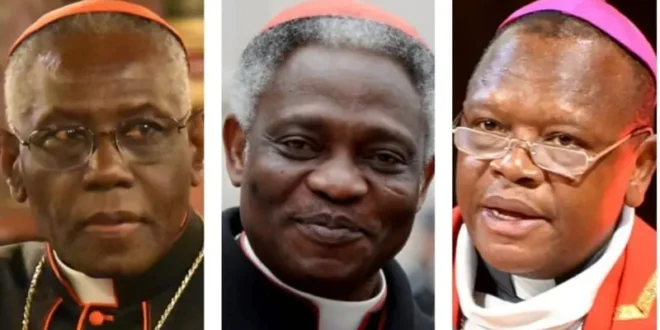
It is difficult to predict who will be Pope. There are many names being proposed. From the African continent, there are three names that are on the list.
Among the Cardinals mentioned; Cardinal Fridolin Ambongo Besengu of the Democratic Republic of Congo, Cardinal Robert Sarah from Guinea and Cardinal Peter Turkson of Ghana.
Fridolin Ambongo Besungu – Congo
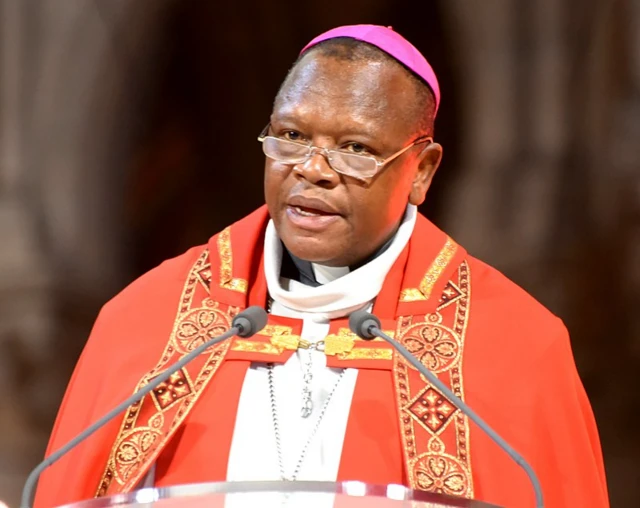
Besengu, the archbishop of Kinshasa, was appointed by Francis in 2019. At 65, he may be considered too young to be Pope. Cardinals are generally reluctant to elect someone so young, as it could have long-term implications for politics and the church.
As a bishop in the Democratic Republic of Congo, Besengu stood up to criticize President Joseph Kabila after his efforts to push through elections, a move that signals his willingness to criticize authoritarian leaders.
He is strongly opposed to homosexuality. When Francis granted permission for blessings for homosexuals, Besengu made a clear statement of opposition, saying along with some other Cardinals, there will be no blessings for homosexuals in Africa.
Robert Sarah – Guinea
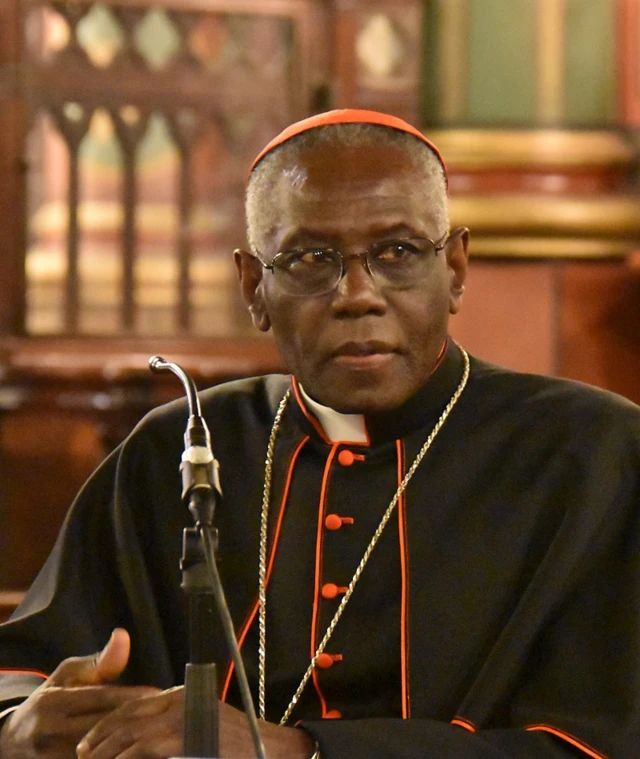
Cardinal Robert Sarah from Guinea has the qualifications to be elected Pope. He is a conservative in the church.
Appointed at the age of 34 as Bishop of Conakry, the 79-year-old theologian faced controversy in January 2020 for a book, “From the Depths of Our Hearts,” which he claimed was written by Sarah and Pope Benedict XVI.
The problem was that Pope Benedict XVI did not acknowledge that he wrote the book, and his name was removed during publication.
Peter Kodwo Appiah Turkson – Ghana
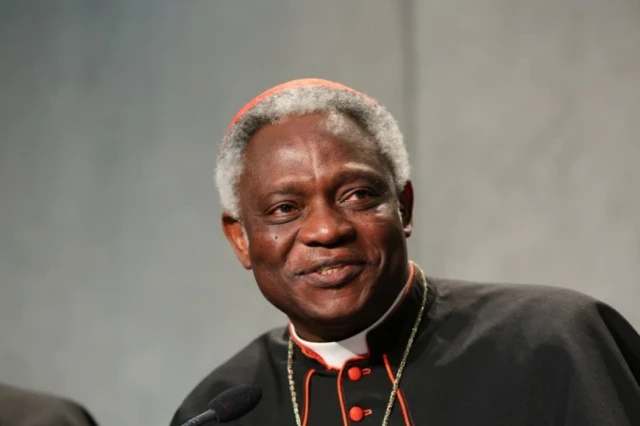
Cardinal Peter Turkson, 76, Archbishop of Cape Coast in Ghana, is also a candidate for Pope. He was appointed a cardinal by Pope John Paul II in 2003.
Turkson is the Chancellor of the Pontifical Academy for Social Sciences. He defended Francis’ decision to bless homosexuals, unlike many priests in Africa, and does not want homosexuality to be outlawed.
This put him at odds with the Ghanaian Bishops and the Ghanaian political establishment, where it is illegal to identify as LGBTQ. Turkson has also been at the forefront of speaking out on climate change and the environment.
Anthea Butler, Professor of Religious Studies and African Studies at the University of Pennsylvania, USA, says, “anything can happen, but don’t assume anything.”