The Lower Eastern Times Opening The Third Eye


Kenya Airways has laid out a roadmap to restore grounded aircraft, grow its fleet to more than 60 planes, expand cargo operations, and build up its maintenance business as part of efforts to strengthen the airline’s operations and financial standing amid high fuel costs, aircraft shortages, and a heavy debt load.
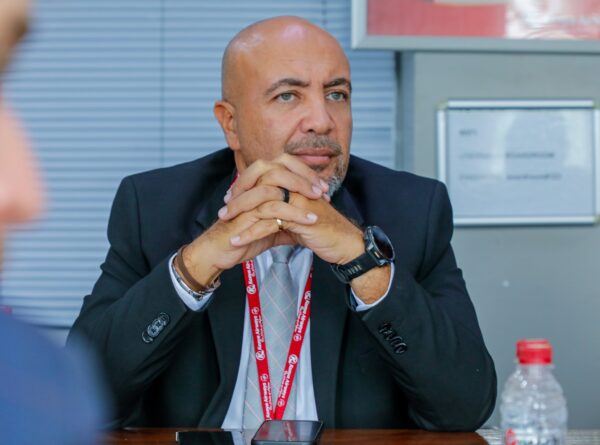
Speaking during a media editors’ roundtable in Nairobi on Wednesday, Acting Group Managing Director and CEO Capt. George Kamal said the airline is not simply looking to expand its existing maintenance hangars but to develop a full MRO City capable of creating more than 2,000 direct jobs.
Click here to join our WhatsApp Channel
Kamal said the airline’s immediate focus is on returning grounded aircraft to service and stabilizing operations before pursuing faster growth, with KQ targeting full fleet capacity by the end of 2026 and a more aggressive expansion phase starting in 2027. Over the next three years, the airline’s medium-term goal is to build toward a fleet of roughly 60 aircraft or more.
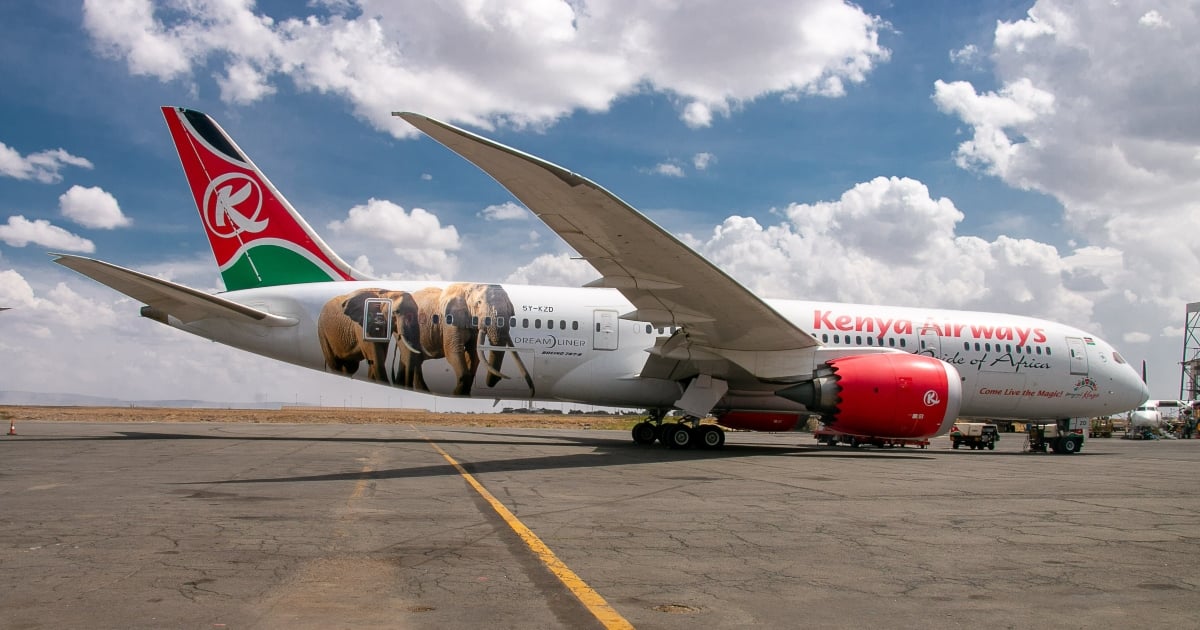
According to KQ, its current capacity limitations stem largely from global shortages of engines and spare parts, which have disrupted aircraft maintenance schedules and availability. Three Boeing 787 Dreamliners remained grounded for much of the first half of 2026, while rising fuel costs added further strain to the airline’s operations.
Management maintains that the core issue is not a lack of passenger demand, but the airline’s struggle to consistently get enough aircraft airborne to meet that existing demand.
Kamal explained that the airline’s turnaround will require significant additional capital, particularly to acquire more aircraft and support expansion. He noted that any transformation comes at a cost, and acquiring aircraft without sufficient cash is simply not feasible — underscoring the need for a strong investor.

KQ’s presentation to editors identified three key execution priorities: restoring fleet capacity, enforcing structural cost discipline, and raising capital while securing strategic backing. Kamal noted progress on the fleet front, pointing out that the airline had, at one point in 2025, operated with only 19 of its 32 aircraft, but is now flying between 25 and 26 aircraft — though the group’s broader fleet figures also include JamboJet.
He clarified that some aircraft were not permanently grounded but were undergoing scheduled maintenance that had taken longer than expected due to difficulties sourcing spare parts.
This fleet strategy is also shaping how KQ serves domestic routes. Kamal said Kenya Airways had not withdrawn from the Eldoret route but had instead given JamboJet greater responsibility for serving it using smaller aircraft, explaining that operating smaller planes allows for more frequent flights at lower cost, while also cutting fuel and maintenance expenses and enabling lower fares on routes where larger aircraft can’t consistently fill enough seats.
On regional routes, Kamal said demand remains relatively strong, with the load factor on intra-African services sitting at about 75 percent. He stressed that the airline’s challenge lies not in demand but in aircraft availability and capacity.
KQ’s presentation also showed that cabin factors on US and European routes exceeded 90 percent in March 2026, even as the broader aviation industry grappled with disruptions tied to geopolitical tensions, rising oil prices, and supply-chain constraints. The airline reported a 72 percent spike in fuel prices during the first half of the year, with Kamal noting that the airline could not pass the full cost increase onto passengers through higher fares, given limitations on how much fares could realistically be raised.
This fuel challenge reflects a broader difficult operating environment for African carriers. According to KQ’s presentation, Africa remains heavily reliant on imported jet fuel, with roughly half of its jet fuel consumption sourced through imports — leaving airlines exposed to global fuel price swings. The presentation also pointed to global aircraft supply constraints, noting that the combined Boeing and Airbus order backlog stands at 16,036 aircraft, with an estimated clearance time of 11.1 years.
Against this backdrop, KQ is looking to diversify revenue beyond passenger travel, with cargo identified as one of its quickest growth opportunities. Cargo currently makes up about 11 percent of KQ’s revenue, with the airline aiming to raise that to roughly 20 percent within two to three years. Kamal said the airline also wants to capture a larger share of Kenya’s export cargo market, arguing that the country’s status as a major exporter presents a significant opportunity. He noted that KQ currently handles about 70 tons of cargo daily but would need to reach 250 tons per day to capture a 40 percent market share — a target he described as the minimum needed for a genuine turnaround. To support this, the airline is considering acquiring or leasing dedicated freighter aircraft, such as Boeing 777 or 767 freighters.
Maintenance, repair and overhaul (MRO) services form another key pillar of KQ’s expansion strategy. The airline’s MRO division is EASA-certified and increasingly serves other African carriers. Kamal said the goal is to move beyond current hangar operations and build a larger MRO City featuring 14 bays, capable of generating more than 2,000 direct jobs.

KQ is also eyeing commercial opportunities within its aviation training academy, which holds IATA approval and runs programmes in partnership with London Metropolitan University, covering areas such as engineering, flight dispatch, piloting, and cabin crew training. Additionally, the airline is exploring the potential expansion of its existing medical centre into a full hospital, with Kamal noting that KQ is in discussions with hospitals in India and Thailand as part of these plans. He described the cargo, MRO, medical, and academy businesses collectively as strong revenue-generating opportunities to develop alongside the airline’s core passenger operations.
KQ’s financial position remains central to its turnaround strategy. Acting Chief Financial Officer Mary Mwenga said the airline’s operational performance is stronger than its balance sheet might suggest, pointing to a 14 percent positive EBITDAL — earnings before interest, tax, depreciation, amortization and rent — in its recently announced 2025 results, a key measure of business viability.
Mwenga attributed part of the airline’s debt pressure to a batch of aircraft acquisitions made around the same period, which meant major maintenance obligations also came due simultaneously, straining cash flow. Kamal echoed this, noting that the aircraft had been acquired at roughly the same age and had since flown similar routes, resulting in overlapping maintenance schedules.
According to KQ, the Government of Kenya has taken on Sh63.1 billion of the airline’s debt, with plans to convert this into equity once a strategic investor is secured. The airline is also pursuing a $500 million recapitalisation. While the search for a strategic investor remains ongoing, Kamal said management could not commit to a definite timeline, given that the process involves third-party due diligence and negotiations.
Questions were also raised regarding KQ’s outstanding obligations to the Kenya Civil Aviation Authority (KCAA), following an Auditor-General observation about the airline’s debt to the regulator. Mwenga said she had not seen the specific report in question but maintained that KQ has payment arrangements in place with its suppliers, including KCAA, and remains in good standing with the regulator through ongoing engagement.
Addressing concerns about how a potential equity investor might affect employees, Kamal reaffirmed that Kenya Airways would remain the country’s national carrier, adding that any investor would be expected to support the airline’s expansion rather than simply take over the existing business. He noted that growing the fleet, MRO operations, and other business lines would require additional staffing, with existing labour agreements and regulations continuing to guide employment decisions.
Beyond raising capital, KQ is also implementing measures to cut structural costs, including centralizing operational functions at the Integrated Operations Control Centre at Msafiri House, revamping ground-support equipment, and bringing KQuench water production in-house.
The airline is additionally leveraging partnerships to expand its network without needing to invest in aircraft for every destination. Its expanded codeshare with Qatar Airways provides access to 11 Asian destinations while feeding eight African routes through Nairobi, and its codeshare with Delta Airlines opens up access to 57 cities across the US and Canada.
Kamal said the airline’s broader strategy is to pursue more measured growth following its earlier rapid expansion, stressing that capacity growth must be underpinned by a sustainable operating structure to avoid repeating past mistakes.