The Lower Eastern Times Opening The Third Eye

By: James Ng’ang’a- Journalism Student, Jewel College.
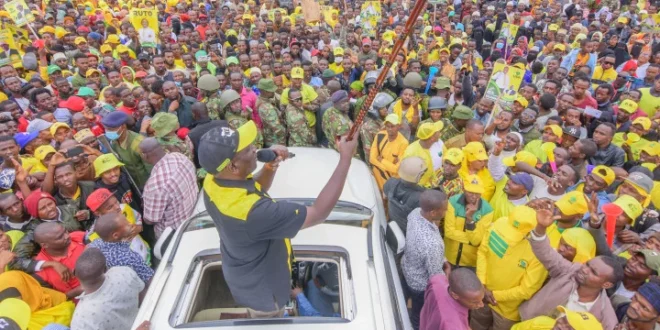
Have you ever wondered why politicians always seem to appear in front of massive crowds, or why certain faces dominate your social media feeds during election season? Why does a packed rally make a candidate seem more popular, and can seeing a politician with supporters actually influence your vote?
This article explores how crowds are strategically used in politics to shape perception, build momentum, sway public opinion, and create the image of power, showing that in modern campaigns, what you see can often matter more than what a politician actually does.
Click here to join our WhatsApp Channel
Some politicians often rent crowds to fill spaces, creating an immediate, tangible, and visible presence. This is more effective at directing attention than relying on individuals alone. Crowds generate a sense of urgency, which can be harnessed to trigger rapid reactions.
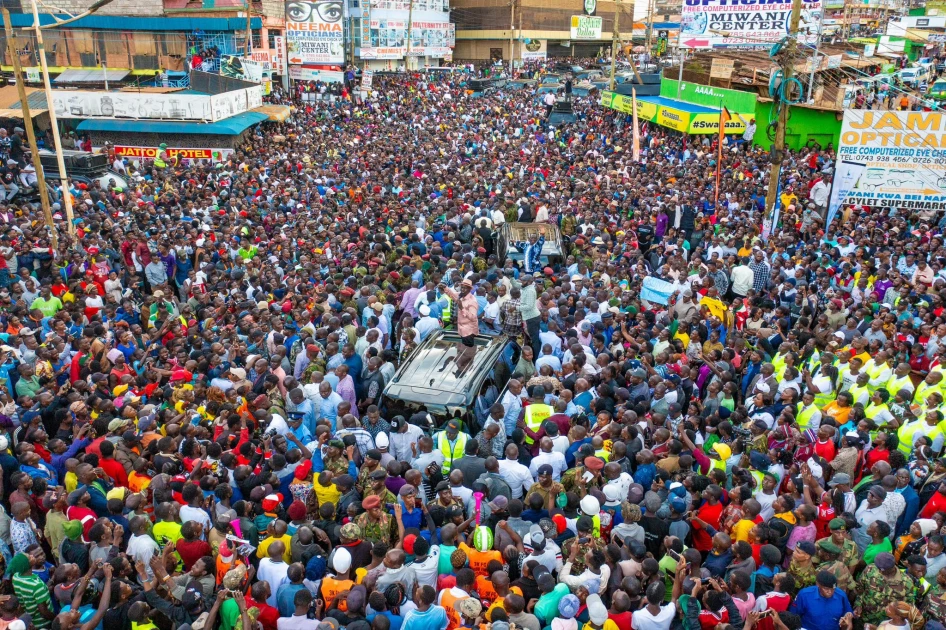
Crowds play a crucial role in politics; images of politicians meeting large crowds create the perception that “this is where to be.” A politician often takes pride in the size of a crowd—the larger the crowd, the greater the perceived support and potential votes.
Crowds also bring energy, motivation, and enthusiasm. They create a sense of belonging, which is exactly what makes them so influential in politics. Perception in politics drives momentum, and this perception can be bi-directional, either positive or negative.
Positive perception is often exploited to attract more supporters; the greater the number of people, the higher the appearance of influence or clout. Some politicians focus on crowds, and by managing perception, they become masters of public attention. Crowds can also sway opinions, particularly among undecided voters who may use the size of a crowd as a measure of a politician’s popularity.
The pursuit of favorable perception has increasingly moved to digital and social media, the fastest way to disseminate information to large audiences. Perception is not merely about incidents like heckling; it shows how individuals notice, organize, and interpret information from the world around them. It is not just what people see or hear, but how they understand it.

Journalists play a key role in creating perception by using attention-grabbing visuals. For example, a visible crowd immediately directs attention and generates a sense of urgency and momentum. Large crowds can psychologically influence voters’ emotions and decisions, making journalists essential in shaping public perception. Campaigns often manipulate media coverage to shape opinion, as politicians rely on public perception to win elections. Ethical questions arise over whether “renting” crowds is fair or deceptive in political messaging.
Perception is central in politics. Politicians do not only compete on policies; they compete on how people perceive them, their opponents, and reality itself. Crowds are used for image building, often incorporating religious or cultural symbols to appear relatable. Politicians stage appearances with farmers, youth, or workers for photo opportunities. Repetition of specific messages—such as “we are fighting corruption,” “we inherited a broken system,” or “the opposition has no plans”—creates familiarity, which voters often interpret as truth.
People vote more with feelings than with data. Fear, hope, and anger shape perception more quickly than statistics. Media appearances are staged to send signals: visiting factories, hospitals, or other public spaces reinforces slogans and helps create shortcuts for instant perception. Politicians often divide groups to solidify support; once people pick a side, perception becomes biased toward “us.” When things go wrong, blame is shifted to previous governments, courts, or external factors, while small wins are highlighted to overshadow bigger problems. Perception softens reality.

This works because human perception is selective, emotional, and influenced by repetition and authority. Politicians understand this and design messages accordingly. For instance, a politician may frame himself as a “hustler” from a poor background, while opponents are labeled as part of the elite or a political dynasty. Policies matter less than the narrative identity. Supporters perceive the “hustler” as relatable, while opponents seem out of touch. Even wealthy backers are still associated with the “hustler” image because the label sticks.
Bottom-up approaches—appearing to empower small traders and youth—gain support even without detailed policy knowledge. Politicians may launch the same project multiple times to reinforce perception. Media coverage of road construction, dams, or markets also shapes public perception, with paid bloggers and influencers amplifying the message.