The Lower Eastern Times Opening The Third Eye
Related Articles



By: Patrick Karanja, Jewel College
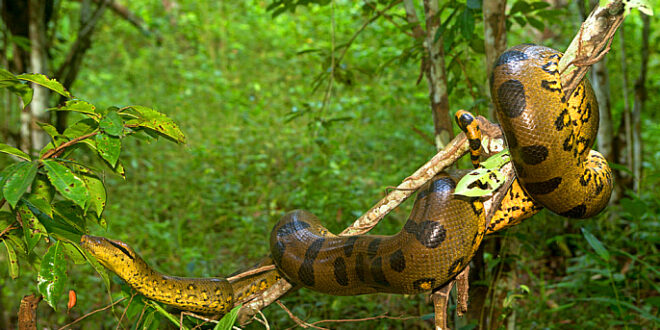
The green anaconda (Eunectes murinus) is one of the largest snakes in the world and is recognized for its size and strength. It is the heaviest snake species, while the reticulated python is generally considered the longest. Large female green anacondas can grow to about 9 metres (30 feet) in length and weigh more than 200 kilograms.
Unlike venomous snakes, green anacondas are constrictors. They capture prey by biting with their sharp, backward-curving teeth before wrapping their muscular bodies around the animal. Research indicates that constriction primarily restricts blood circulation, causing the prey to lose consciousness before it is swallowed whole.
Green anacondas are semi-aquatic and spend much of their time in rivers, swamps and flooded forests across South America. Their eyes and nostrils are positioned on top of their heads, allowing them to remain mostly submerged while observing their surroundings. Their dark green and brown markings also provide effective camouflage in aquatic environments.
These snakes feed on a wide variety of animals, including fish, birds, turtles, capybaras, caimans, wild pigs and deer. Their flexible jaws enable them to swallow prey much larger than their heads, and after consuming a large meal they can go for weeks or even months without feeding again.
Although there have been isolated reports of anaconda attacks on humans, confirmed cases are rare. Wildlife experts advise people to keep a safe distance from these snakes, as their size and strength can pose a danger if they feel threatened.
Scientists continue to study green anacondas to better understand their behaviour and diversity. In 2024, researchers identified a genetically distinct northern green anaconda population in the Amazon, highlighting that there is still much to learn about these reptiles.