The Lower Eastern Times Opening The Third Eye

By: Derrick Kmuli, Mount Kenya University
Music has always played a central role in Kenyan society. For generations, different communities have used it as a powerful tool for storytelling, cultural expression, celebration, and the passing down of traditions.
Traditional music was deeply tied to community life and was performed during important ceremonies such as weddings, initiation rites, funerals, and harvest celebrations. People sang, danced, and played instruments like drums, horns, rattles, and stringed instruments, with each ethnic group developing its own unique sound that reflected its identity, beliefs, and way of life.
Click here to join our WhatsApp Channel
During the colonial period, Western musical styles and instruments were introduced into Kenya, leading to a fusion of traditional African sounds with foreign influences. This marked the beginning of musical experimentation, as local artists began blending the old with the new. After independence in 1963, Kenyan music began to flourish more prominently, with genres such as Benga rising to popularity and shaping the country’s modern music identity.
In the 1980s and 1990s, the expansion of radio and television significantly boosted the music industry by giving local artists wider exposure. This era saw the rise of gospel, reggae, pop, and later hip-hop, which became dominant across urban and rural audiences alike.
In the present day, digital technology and social media have completely transformed how music is produced, distributed, and consumed. Genres such as Afro-pop and Gengetone have become especially popular among the youth, while Kenyan artists continue to gain global recognition through streaming platforms and international collaborations.

Despite these modern influences, traditional music still remains deeply rooted in Kenyan culture, with many artists blending indigenous sounds with contemporary styles to preserve cultural heritage.
How AI is Transforming Music Production in Kenya and Beyond
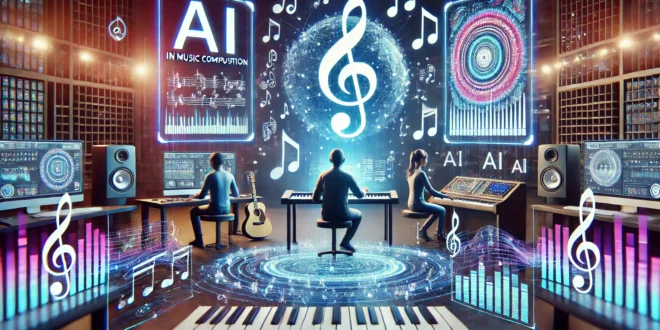
Artificial Intelligence (AI) is rapidly reshaping the global music industry, and Kenya is no exception. One of its most powerful contributions is in music creation and idea generation. Today, musicians and producers can use AI tools to instantly generate beats, melodies, and chord progressions by simply typing prompts such as “create a smooth Afrobeat instrumental” or “make a Gengetone club beat with heavy bass.” This allows artists to explore new ideas quickly, overcome creative blocks, and experiment with sounds that might have taken hours or days to develop manually.
AI is also improving audio editing and sound quality. Advanced tools can now separate vocals from instrumentals, clean up background noise, and enhance clarity in recordings with high precision. This is especially useful for upcoming artists who may not have access to expensive studio equipment, as it allows them to produce professional-quality music from home or small studios.
Another major development is AI-powered mastering, where platforms like LANDR and similar software analyze raw audio tracks and automatically adjust levels, equalization, and overall balance. This ensures that songs meet industry standards for streaming platforms such as Spotify, Apple Music, and YouTube, often within minutes rather than hours of manual work.

In addition, AI is now being used in vocal generation and voice modeling. Artists can use AI-generated voices to create demo tracks, background vocals, or even experiment with different vocal styles before recording the final version. Some advanced systems can replicate tone, pitch, and singing style, giving musicians more flexibility in the creative process.
Despite these advancements, AI is not replacing human creativity. Instead, it is acting as a supportive tool that enhances music production. It helps artists work faster, reduce production costs, and focus more on storytelling, originality, and artistic expression. In the future, the combination of human creativity and AI technology is likely to redefine how Kenyan music is created and shared globally.