The Lower Eastern Times Opening The Third Eye
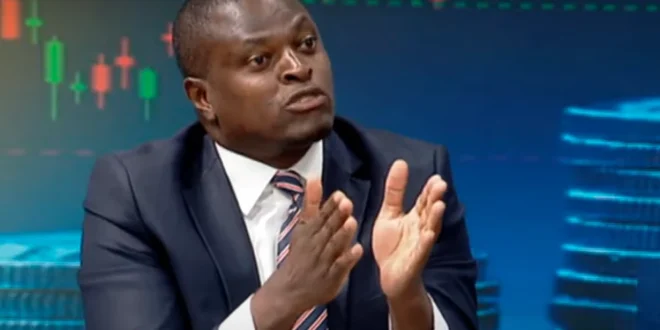
Kiharu MP Ndindi Nyoro has restated his reservations about President William Ruto’s push to model Kenya’s economic transformation on Singapore.
Appearing on JKLive on Wednesday, Nyoro said the two countries differ greatly in population size, land mass and economic structure, making direct comparisons unrealistic. He argued that meaningful economic benchmarking should be done between nations with comparable circumstances.
Click here to join our WhatsApp Channel
“To put it simply, you cannot measure the success of a banana farmer using oranges or pears,” Nyoro said, adding that Kenya’s economy more closely resembles South Korea’s. “If we are serious about emulating another country, then South Korea makes more sense.”
He pointed to the wide gap in wealth levels, noting that Singapore’s GDP per capita is about USD 90,000, while Kenya’s stands at roughly USD 3,000.
Nyoro also observed that Singapore’s early economic growth was driven by heavy state involvement, with government-linked firms such as Temasek controlling major companies—a state-capitalist approach that contrasts with Kenya’s current drive to privatise state-owned enterprises.
According to Nyoro, Kenya’s conditions mirror South Korea’s more closely than Singapore’s. Both Kenya and South Korea have populations of around 50 million, compared with Singapore’s about six million, and share similarities in their development trajectories.
“Our economic ideals align more closely with South Korea. We are both countries with populations in the 50 millions,” he said.

Nyoro cited the “Asian tiger” model, where countries initially supported private enterprise and labour-intensive industries before shifting to capital- and technology-intensive sectors, largely powered by foreign direct investment (FDI).
He cautioned that Kenya often confuses remittances with FDI, stressing that remittances are consumption-based, while FDI drives long-term investment.
Using South Korea as an example, Nyoro said the government played an active role in nurturing private enterprise, particularly during the era of General Park, by building large industrial groups known as chaebols.
He warned against blending political patronage with economic incentives and said market-distorting corruption remains a major obstacle to growth. Nyoro emphasised that sustained investment in human capital should be Kenya’s top priority.
Embakasi East MP Babu Owino backed Nyoro’s position, highlighting sharp geographical and demographic contrasts between Kenya and Singapore. Singapore spans just 736 square kilometres—about the size of Nairobi—while Kenya covers roughly 580,000 square kilometres.
He also noted the population disparity, with about 58 million Kenyans compared to Singapore’s 6.1 million people.
“How do you fit 58 million people into a country the size of Singapore?” Babu Owino posed, arguing that Kenya’s development model must be locally grounded rather than borrowed wholesale.

The two MPs said Kenya’s economic strategy should reflect its population, land size and social realities, making South Korea a more appropriate benchmark than Singapore.
President Ruto has repeatedly maintained that Kenya can achieve rapid development similar to Singapore if it remains disciplined, follows through on reforms and invests strategically in key sectors.
Speaking on December 14, 2025, during a church service at the Africa Inland Pentecostal Church Assembly (AIPCA) in Gatundu North, Kiambu County, Ruto said national transformation requires more than political rhetoric, calling instead for concrete programmes and consistent policy execution.
He said government resources would be directed towards infrastructure, industrialisation and other productive sectors to fast-track development and improve livelihoods.
“We are not joking. This country must be transformed by every means possible. We are behind schedule in eliminating hunger and poverty,” Ruto said.
“This country can be transformed. If Singapore, South Korea and Malaysia did it, why can’t we?”