The Lower Eastern Times Opening The Third Eye

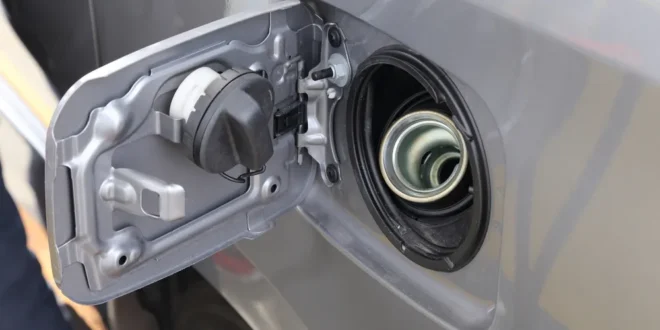
If you’ve ever pulled into a petrol station and wondered why the fuel tank door on your car is located on one side rather than the other, you’re not alone. A closer look at vehicles on the road reveals that many cars have their fuel filler doors positioned on the passenger side.
While it may seem like a random design choice, there are several practical reasons behind it.
Click here to join our WhatsApp Channel
One of the main factors is safety. In countries where vehicles drive on the right side of the road, such as the United States, parking on the roadside places the passenger side away from moving traffic. Having the fuel tank door on that side allows drivers to refuel more safely if they need to stop along the road, reducing exposure to passing vehicles.
Manufacturers also consider convenience and traffic flow when designing vehicles. Fuel stations are often crowded, and having fuel doors on different sides across various models helps distribute cars more evenly among pumps, preventing congestion and reducing waiting times.
Another reason involves vehicle engineering and design. The placement of the fuel tank depends on factors such as exhaust systems, suspension components, structural reinforcements, and overall vehicle layout. Engineers position the tank where it best fits within the vehicle while maintaining safety standards and maximizing space efficiency.
Interestingly, not all vehicles have fuel doors on the passenger side. Some manufacturers place them on the driver’s side, while others vary the location depending on the model. There is no universal industry standard that dictates which side a fuel filler door must be on.
For drivers who frequently switch between different vehicles, locating the fuel door can sometimes be confusing. Fortunately, most modern cars include a small arrow next to the fuel gauge on the dashboard. The arrow points toward the side of the vehicle where the fuel filler door is located, helping drivers avoid the embarrassment of pulling up to the wrong pump.
Ultimately, the location of a car’s fuel tank door is determined by a combination of safety considerations, engineering requirements, and design preferences. While many vehicles feature fuel doors on the passenger side, the decision is less about tradition and more about practicality and efficiency.
The next time you stop to fill up your tank, take a look around—you may notice that the placement of fuel doors varies more than you think.