The Lower Eastern Times Opening The Third Eye

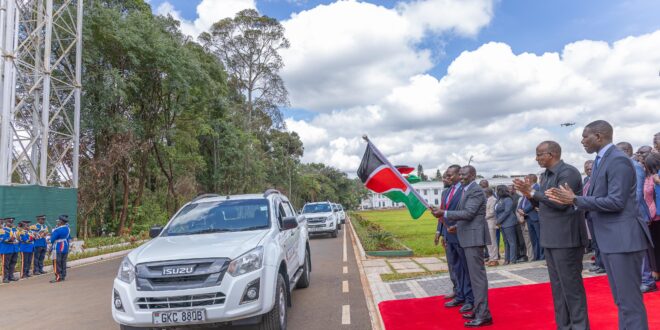
President William Ruto has said the government is taking decisive steps to address the ongoing shortage of essential medicines in public health facilities across Kenya.
Speaking at State House during the commissioning of disease surveillance vehicles for counties, Ruto explained that the Kenya Medical Supplies Agency (Kemsa) is undergoing a strategic overhaul to strengthen its role in the national medical supply chain. This move is part of a larger plan to reduce healthcare costs and expand access to quality medical services.
The President announced that the government has allocated Sh10 billion to Kemsa, aimed at boosting its supply capacity from the current 50 percent to full stock availability. “Kemsa now has no reason not to deliver every required medical supply to the counties,” he asserted.
Governors and senior health officials from both the national and county governments, including Health Cabinet Secretary Aden Duale, attended the event.
Ruto also called on county governments to ensure timely payments to Kemsa for medical supplies delivered. “Counties must take responsibility. As we process their SHA claims, they must also pay for the drugs they receive,” he said.
He reaffirmed his administration’s resolve to end the chronic ‘hakuna dawa’ (no medicine) issue that has long plagued public hospitals. He emphasized that the new partnership between Kemsa, the Social Health Authority (SHA), and county governments is designed to guarantee consistent access to essential medicines.
“With SHA now funding health facilities directly, there is no excuse for medicine shortages,” Ruto said.
The President also reassured staff of the dissolved National Health Insurance Fund (NHIF) that their employment is secure during the transition to SHA. He confirmed that NHIF workers are being prioritized for new roles, and those not absorbed into SHA will be reassigned to other public service positions.
“My commitment to Kenyans is clear—no one will lose their job in this transition,” he stated.
Additionally, Ruto revealed that the government is integrating digital systems to make healthcare services paperless within six months, a move aimed at improving efficiency and reducing fraud.