The Lower Eastern Times Opening The Third Eye
Internet access in Uganda has been partially restored after a nationwide blackout that lasted several days during last week’s general election, according to independent network monitoring group NetBlocks.
While connectivity has improved since Sunday, large segments of the population remain offline or experience intermittent service, particularly on mobile networks, which serve as the primary means of access for most Ugandans.
Click here to join our WhatsApp Channel
The Uganda Communications Commission had cut internet services on January 13, the day before national polls, amid opposition claims of widespread election irregularities.
The shutdown, which restricted communications and blocked live transmission of results, drew criticism from human rights organizations, who argued that it undermined transparency and public trust in the electoral process.
NetBlocks reported that backbone connectivity at the international gateway level has been restored, but many end-users still face limited access. Messaging apps and social media platforms remain partially blocked or throttled, curtailing real-time reporting and political discourse.
“Network data show a partial restoration of internet connectivity in Uganda, though many users remain offline. Service was cut on the 13th, during elections in which the opposition faced arrests, some voting machines were disconnected, and ballots were reportedly stuffed,” NetBlocks said in a statement on X.
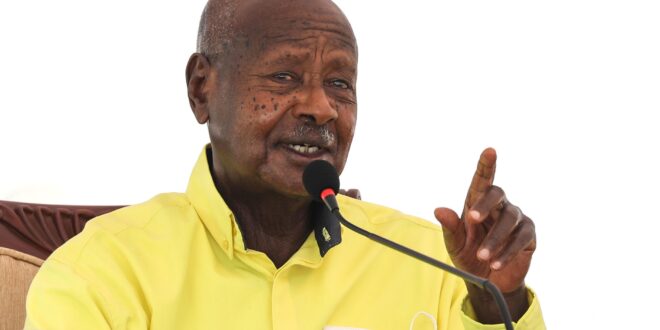
On Saturday, President Yoweri Museveni, 81, was declared the winner of Uganda’s January 15, 2026, presidential election, securing a seventh term in office.
Museveni’s victory reinforces his long-standing dominance in Ugandan politics, a tenure spanning over four decades. His new term will run from 2026 to 2031.

The Electoral Commission announced that Museveni’s National Resistance Movement (NRM) won decisively with 7.9 million votes, representing 71.6% of total votes cast. His main challenger, Robert Kyagulanyi, popularly known as Bobi Wine, garnered 2.7 million votes.
Museveni first rose to prominence as leader of the National Resistance Army (NRA), a rebel force that fought a five-year guerrilla war against Milton Obote’s government and its successor. He took power in January 1986, ending years of political violence, and initially focused on stabilizing the economy and resolving insurgencies, particularly in northern Uganda.
Uganda’s 1995 Constitution established a multiparty democracy framework and set presidential term and age limits, capping presidents to two terms and requiring candidates to be between 35 and 75 years old. However, subsequent political changes significantly altered these provisions.