The Lower Eastern Times Opening The Third Eye

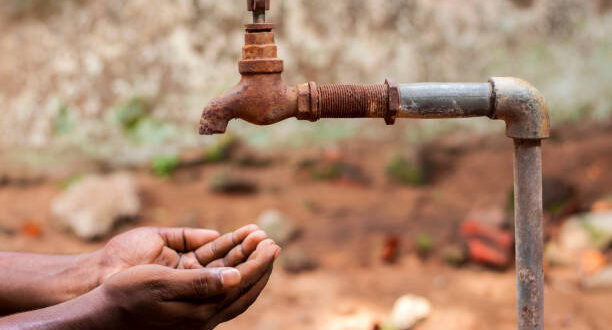
Water remains a scarce and precious resource for the residents of the densely populated Kitengela town, who continue to suffer from an ongoing and severe water shortage.
The crisis began in February 2019 when the government, through the Ministry of Water and Sanitation, banned the Export Processing Zone Authority (EPZA) from supplying fresh water, citing the business as illegal. This led to an immediate halt in the piped water supply, leaving residents without a reliable source.
In response, an unregulated and profitable water vending industry quickly emerged.
The government ordered Nairobi Water and Sewerage Company to provide water to Kitengela, but the Kajiado County government, led by Governor Joseph Ole Lenku, failed to reach an agreement with EPZA to use its existing infrastructure. Negotiations dragged on until December but ended without success.
Instead, the county government invested Ksh 20 million to set up eight water kiosks, promising residents affordable water at Ksh 3 per 20-litre jerrican.
However, due to the large population, long queues formed. Some corrupt officials allegedly colluded with cartels, selling hundreds of jerricans to select individuals, who then resold the water at inflated prices to those unable to access the kiosks directly.
A few months later, the water supply was suspended, and the kiosks operated only two or three times a week with water rationed. Residents also reported foul-smelling water at times.
Currently, the kiosks remain abandoned.
Most residents now rely on water vendors who deliver water using hand-pulled carts, donkeys, or purchase from numerous private water kiosks that have sprung up.
Salty water sells for Ksh 20 per 20-litre jerrican, while fresh water costs between Ksh 30 and 50.
Due to the lack of regulation, there are growing concerns about the hygiene and safety of the water being sold.
Large vendors with water bowsers source water from Nairobi, while smaller vendors with carts and donkeys fetch water from Athi River in Machakos County.
Local residents are urging the Kajiado county government to provide a permanent solution to the crisis.
Taps in the town are mostly supplied by salty water from private boreholes, with 1,000 cubic meters costing as much as Ksh 250.
Michael Semera, the County Executive Committee member for Water, Environment, Climate Change, and Natural Resources, declined to comment on the severe water shortage.