The Lower Eastern Times Opening The Third Eye
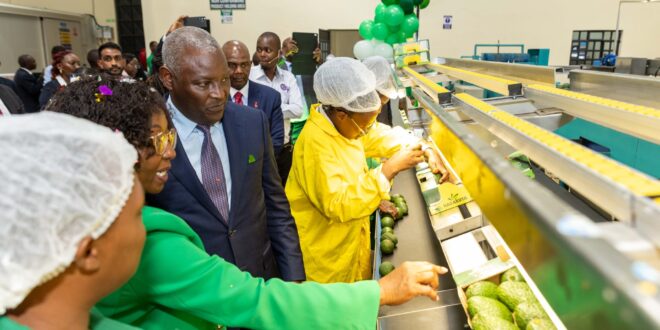
Karakuta Fresh Produce has opened a state-of-the-art avocado packhouse in Nairobi with a capacity of 7,500 tonnes, a strategic move aimed at increasing exports and strengthening ties with over 1,500 smallholder farmers in Kiambu, Nyeri, Kirinyaga, and Meru counties.
Click here to join our WhatsApp Channel
The facility will process avocados from Karakuta’s 180-acre model farm, as well as produce sourced from partner farmers. This investment seeks to address ongoing quality control issues that have limited Kenya’s competitiveness in international avocado markets, despite the country’s high production volumes.
“This packhouse goes beyond physical infrastructure — it’s a catalyst for improving livelihoods,” said CEO Grace Ngungi at the launch. “By merging advanced technology with our farmer network, we’re meeting international benchmarks for quality and traceability.”
Equipped with an Eshel Eilon grader from Israel — one of only 52 in the country — the packhouse was developed through a partnership with Equity Group. Dr. James Mwangi, Equity Group CEO, hailed the initiative as a major step in agricultural industrialization.
“Global markets expect quality and reliability,” Mwangi noted. “Karakuta’s growth illustrates how ambition, combined with the right support, can drive transformation far beyond the farm gate.”
In its early years, Karakuta exported eight containers of avocados, then 18 in the following season, and now aims to hit 60 containers by 2025.
The avocado industry in Kenya has struggled with inconsistent quality due to the fragmented nature of smallholder production. Experts believe investments like Karakuta’s packhouse will help improve adherence to export standards.
Dr. Christine Chesaro of the Horticultural Crops Directorate urged stakeholders to tap into emerging markets while maintaining high quality and minimal chemical residues.
Joseph Wagurah, CEO of the Avocado Exporters Association of Kenya, encouraged smallholders to work in organized groups to streamline training and quality assurance.
Ngungi emphasized the facility’s role in driving both quality and farmer empowerment: “We want every farmer in our network to feel like a stakeholder in this journey.”
The launch signals a broader shift toward value addition and export-focused processing in Kenyan agriculture — a key element of Equity Group’s Africa Recovery and Resilience Plan, which has increased agricultural financing from 3% to 16% of its loan portfolio since 2018.
“Investments like this drive job creation and income growth throughout the value chain,” said Dr. Mwangi. “Karakuta is proving that scaling up is possible, and that women-led agribusinesses can lead the way in transformation.”