The Lower Eastern Times Opening The Third Eye

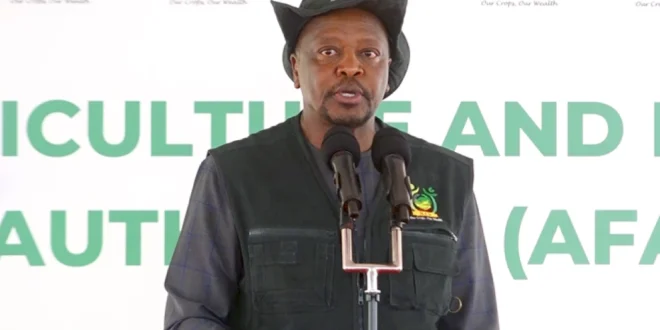
Agriculture and Livestock Development Cabinet Secretary Mutahi Kagwe has stepped up efforts to reform the agricultural sector, urging swift legislative action to cut reliance on food imports while boosting local production and exports.
Speaking during a high-level meeting that brought together State Agencies and Agriculture Committees from both the National Assembly and Senate, Kagwe emphasised the need to align policies, laws, and budget priorities to achieve food self-sufficiency.
Click here to join our WhatsApp Channel
The discussions centred on fast-tracking key agricultural bills and reforms aimed at modernising the sector, increasing productivity, and expanding access to global markets for Kenyan produce.
Kagwe stressed that strong legal frameworks are essential to transforming agriculture into a competitive and export-driven industry, warning that failure to prioritise value addition risks continued job losses and missed market opportunities.
He noted that Kenya must shift from exporting raw materials to processing them locally to create jobs and maximise returns, particularly when targeting markets such as China.
Principal Secretary for Livestock Development Jonathan Mueke backed the call for urgent reforms, saying outdated laws continue to slow growth and innovation in the sector. He called for closer collaboration between the Ministry and Parliament to fast-track priority legislation.
The meeting resolved to prioritise several proposals covering crops, livestock, food safety, mechanisation, and agricultural data systems, all aimed at strengthening the country’s production capacity.
National Assembly Agriculture Committee Chairperson John Mutunga called for a unified national strategy to reduce dependence on imports, noting that production gaps remain a major challenge.
He also highlighted climate change and recurring droughts as key threats to food production, stressing the need for coordinated, locally driven solutions.
Acting Agriculture and Food Authority Director General Calistus Kundu proposed strengthening local markets through increased domestic procurement, especially by institutions like schools, to ensure stable demand for farmers.
From the Senate, Hezena Lemaletian urged greater investment in agricultural education and financing for youth, including expanded support through institutions such as the Higher Education Loans Board.
Kagwe also called for increased funding to the sector, pointing out its major contribution to the economy and questioning the low budget allocation it receives.

He revealed that Parliament has shown support for higher funding and faster passage of key reforms, including the Digital Agricultural Information Bill, 2026, the National Food Reserve and Trading Corporation Bill, and the Mechanisation Bill, alongside amendments to existing laws.
The proposed changes aim to modernise agricultural governance, improve efficiency across the value chain, and position Kenya as a food-secure nation with stronger export capacity.
The meeting ended with a joint commitment between the Ministry and Parliament to accelerate legislative reforms and increase funding, in a coordinated push to make agriculture a key driver of economic growth and trade.