The Lower Eastern Times Opening The Third Eye
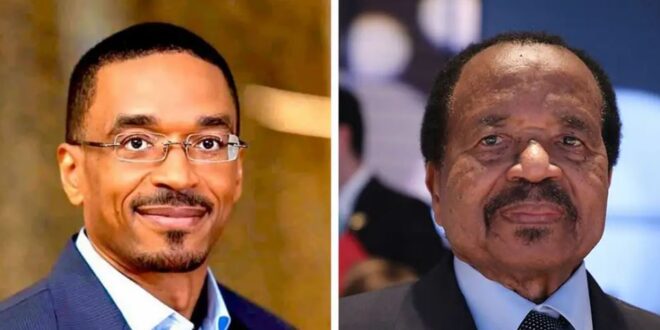
Cameroon’s long-time president, Paul Biya, has appointed his son, Franck Emmanuel Biya, as Vice President in a move that is stirring intense debate over succession and the state of democracy in the country.
The appointment, confirmed through a presidential decree dated April 4, places Franck Biya in one of the most influential roles in government. In addition to the vice presidency, he is set to oversee the armed forces and hold a senior position in the defence ministry, effectively giving him significant control over both political and military affairs.
Click here to join our WhatsApp Channel
This development follows the recent reintroduction of the vice president’s office, a position intended to ensure leadership continuity, particularly given Biya’s advanced age. At 93, he remains the world’s oldest sitting head of state and has been in power since 1982.
Officials within the government have defended the constitutional changes, saying they are meant to strengthen governance and establish a clear succession plan in case of the president’s death or incapacity.
The amendment was approved during a joint parliamentary session, where 200 legislators supported it, 18 opposed it, and four abstained. It now awaits the president’s formal assent.
Proponents argue the changes will improve efficiency in governance by ensuring a high-ranking official can effectively represent the president when necessary. They also say it relieves the Senate of succession duties, allowing it to focus on lawmaking.
Previously, the constitution required the Senate leader to take over temporarily if the president died or became incapacitated, pending fresh elections. Under the new law, however, the vice president—appointed by the president—will automatically assume office and complete the remaining term.
Opposition groups have criticized the process, saying it lacked broad public consultation. The Social Democratic Front (SDF), which holds six parliamentary seats, boycotted the vote after advocating for a system where the vice president would be elected alongside the president.
Critics also warn that the move could entrench power within the Biya family, raising concerns about a possible dynastic succession. Analysts argue that concentrating both political and military authority in the hands of the president’s son may weaken democratic institutions.

The decision comes in the wake of a contested 2025 election that triggered protests and heightened political tensions nationwide.
With Franck Biya now occupying a central role in government, questions are growing about Cameroon’s political direction and whether the country is moving toward a hereditary transfer of power.
Meanwhile, opposition leader Maurice Kamto of the Cameroon Renaissance Movement has strongly condemned the amendment, describing it as a “constitutional and institutional coup.” He accused the ruling party of pushing the country toward what he termed a “republican monarchy” and announced plans for an online campaign against the changes.

Historically, Cameroon had a vice president during its federal era between 1961 and 1972, before the position was abolished following a referendum that established a unitary state.
Biya’s decades-long rule has long fueled debate about succession, and despite the reinstatement of the vice presidency, uncertainty still surrounds the country’s political future after his tenure.