The Lower Eastern Times Opening The Third Eye

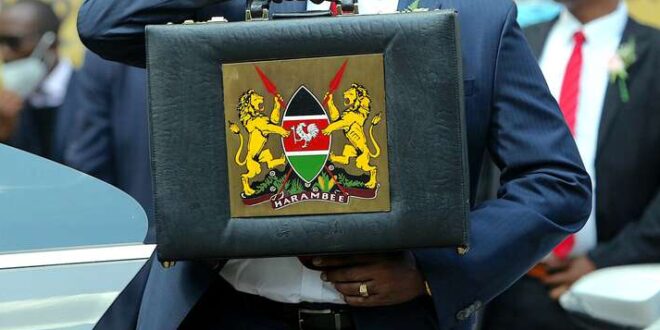
Attention is firmly fixed on Treasury Cabinet Secretary John Mbadi as he tables the 2026/27 national budget, a record-breaking Sh4.84 trillion spending plan designed to spur economic expansion, generate employment and strengthen key sectors of the economy.
The budget is being presented against the backdrop of mounting economic pressure on households, with many Kenyans struggling with the high cost of living, joblessness and increasing prices of essential goods. As a result, the fiscal statement ranks among the most closely watched policy announcements of the year.
Click here to join our WhatsApp Channel
Treasury estimates indicate that the government aims to collect Sh3.67 trillion in revenue. This figure includes Sh2.9 trillion from ordinary revenue, Sh644 billion in Appropriations in Aid and Sh44 billion from grants.
Despite the projected collections, government expenditure is expected to exceed revenue by about Sh1.2 trillion, creating a deficit that will be financed through both local and foreign borrowing.
Officials at the Treasury project that domestic borrowing will contribute nearly Sh1 trillion towards closing the financing gap, while external borrowing is expected to account for Sh148 billion.
In addition, the government has set aside resources to settle pending bills estimated at Sh83 billion, a move intended to inject liquidity into the economy and support business operations.
Key allocations in the budget target sectors such as education, infrastructure development and economic empowerment initiatives, with the administration banking on these investments to stimulate growth and create more opportunities for the youth.
However, the government continues to face pressure to maintain fiscal discipline amid growing concerns over Kenya’s expanding public debt burden.
The budget announcement comes as neighbouring countries, including Uganda and Tanzania, also unveil their fiscal plans aimed at protecting their economies from global uncertainties, including inflationary pressures linked to the conflict in the Middle East.
At the same time, opposition leaders have launched an alternative economic proposal dubbed the “People’s Budget,” presenting a different approach to managing the country’s finances.
The opposition blueprint proposes expenditure of Sh4.32 trillion and seeks to reduce the fiscal deficit to Sh593.5 billion, equivalent to 2.8 percent of Gross Domestic Product, compared to the government’s projected deficit of 5.3 percent.
Speaking during the unveiling of the proposal, Kalonzo Musyoka criticized Kenya’s rising debt levels, arguing that future generations risk being burdened with loan repayments for debts they had no role in accumulating.
The coalition also questioned the allocation of Sh1.5 trillion for debt repayment and pensions, saying a larger share of the funds should be directed towards development and social welfare programmes.
Among its proposals are increased investment in education and healthcare, the revival of programmes such as Linda Mama and Edu Afya, and the creation of an Sh80 billion fund dedicated to youth employment.
The opposition is further pushing for the removal of the Affordable Housing Levy, as well as taxes imposed on mobile money transactions and mobile phones.
Additionally, coalition leaders want reductions in allocations to State House and the National Intelligence Service, with the savings redirected to irrigation projects aimed at improving food production and enhancing food security.