 The Lower Eastern Times Opening The Third Eye
Related Articles



The High Court has temporarily stopped the National Transport and Safety Authority (NTSA) from implementing its newly launched instant traffic fines system.
In orders issued on Thursday, Justice Bahati Mwamuye granted conservatory orders halting the system’s rollout until a petition filed by lawyer Shadrack Wambui challenging the directive is heard and determined.
Click here to join our WhatsApp Channel
The judge directed NTSA and other involved parties to stop issuing, generating, demanding, or enforcing automated traffic penalties under the new system.
The ruling also bars authorities from using algorithm-based or automated platforms to issue traffic fines through the contested Instant Fines Traffic Management System.
Justice Mwamuye further restrained the respondents, their officers, agents, or anyone acting on their behalf—including members of the multi-agency traffic enforcement teams—from continuing with the implementation of the system until the case is concluded.
The petition questions the legality of NTSA’s instant fines system, which had sparked debate among motorists and stakeholders in the transport sector.
Court Timelines
The court also outlined key deadlines in the case:
- March 13, 2026: Petitioners must serve the court order to all respondents.
- March 20, 2026: NTSA and the State Law Office must file their responses.
- April 9, 2026: The case will be mentioned again to confirm compliance and set a date for an expedited hearing.
Justice Mwamuye indicated that the court intends to determine the matter within 90 days from the mention date.
About the Instant Fines System
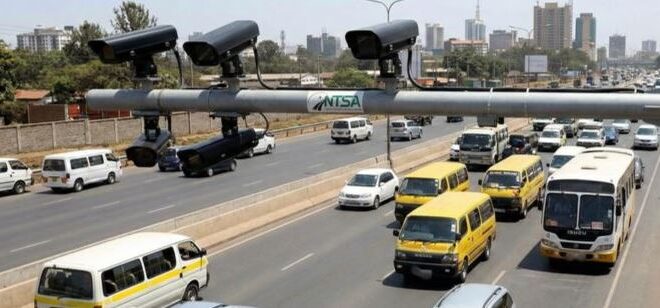
NTSA had announced on Monday that the fully automated traffic enforcement system had gone live and would issue fines without human involvement.
The authority said the system aims to improve transparency, efficiency, and accountability in traffic enforcement.
Under the system, once a traffic violation is detected, vehicle owners receive an SMS notification showing the offence, location, time, and the amount payable.
The initiative is part of NTSA’s broader Usalama Barabarani road safety campaign.

How the System Was Designed to Work
- Detection: Smart cameras installed along major roads such as Thika Superhighway, Mombasa Road, and the Southern Bypass capture violations in real time. Both fixed and mobile cameras detect offences including speeding, lane indiscipline, driving on pavements, illegal PSV pick-ups, phone use while driving, and failure to wear seatbelts.
- Verification: The system uses Artificial Intelligence (AI) and Automatic Number Plate Recognition (ANPR) technology to match vehicle plates with NTSA databases and the owner’s e-driving licence for confirmation.
- Notification: Once verified, motorists receive an instant SMS alert with details of the offence and the fine amount.
- Payment: Drivers are required to pay the fine within seven days through KCB branches, M-Pesa, or USSD codes. Failure to settle within that period leads to interest being added and blocks access to NTSA services until payment is made.
NTSA had stated that fines would range between Sh500 and Sh10,000 depending on the offence.
Motorists who fail to clear penalties would also be locked out of services such as vehicle inspection, logbook processing, and ownership transfers.
Additionally, the system is linked to the Smart Driving Licence framework, meaning repeat offenders could face demerit points, licence suspension, or mandatory retraining.
NTSA maintains that the automated platform is part of its broader plan to modernise traffic enforcement and enhance road safety by reducing reliance on manual processes and human error.
