The Lower Eastern Times Opening The Third Eye
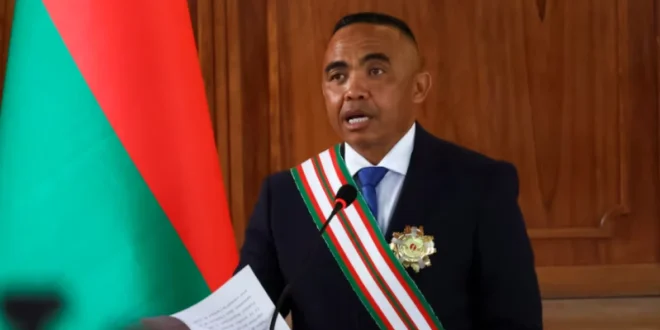
Madagascar’s coup leader, Colonel Michael Randrianirina, was sworn in as president on Friday amid loud cheers, music, and ceremonial displays, just days after seizing power in a military takeover that followed weeks of youth-led demonstrations against the previous government.
Former president Andry Rajoelina, who fled abroad after being impeached by lawmakers last weekend, has rejected the coup and insists he remains the country’s legitimate leader. His ouster was quickly endorsed by Madagascar’s High Constitutional Court, even as much of the security apparatus shifted its loyalty to the new regime.
Click here to join our WhatsApp Channel
Both the African Union and United Nations Secretary-General António Guterres have denounced the military takeover, which came after “Gen Z” protests fueled by worsening water and electricity shortages.
During his swearing-in at the High Constitutional Court — a colonial-era red-brick building in the capital — Randrianirina pledged to serve with fairness and integrity.
“I will fully and justly fulfill the responsibilities of the presidency and dedicate my strength to protecting national unity and human rights,” he declared as military officers raised swords and trumpets sounded in salute.
The new leader announced that a military-led committee will govern alongside a transitional administration for up to two years before holding elections, though analysts have cast doubt on that timeline.
“Promises of a two-year transition mean little without concrete safeguards to prevent the junta from consolidating power,” said Ketakandriana Rafitoson, Vice Chair of Transparency International, speaking to Reuters from Washington.
Although many young protesters initially celebrated Rajoelina’s downfall, some have begun voicing unease over the military’s rapid consolidation of authority.
“This is only the beginning,” said 18-year-old student Mioty Andrianambinintsoa during the inauguration, adding that the protesters’ ultimate goal — a people-centered government — had yet to be achieved.
Colonel Randrianirina commands Madagascar’s elite CAPSAT unit, which played a key role in the 2009 coup that first brought Rajoelina to power, though he himself did not take part in that earlier event. He broke ranks during the latest unrest, refusing to suppress demonstrators and instead offering them protection.

Madagascar, a nation of about 30 million with an average age under 20, remains plagued by deep poverty despite its rich natural resources — including vanilla, nickel, sapphires, and ilmenite. The World Bank notes that the country’s per capita income, now around $600, has declined sharply since independence in 1960, making it one of the few nations poorer today than six decades ago.