The Lower Eastern Times Opening The Third Eye

By: BBC
Kenya’s William Ruto came to power on a high note, raising hopes among ordinary people who expected him to deliver on his promises to improve their lives. Instead, he faces relentless criticism – arguably the most in the country’s history.
Seemingly angered by the strength of the opposition, he asked on Wednesday why similar public anger had never been directed at his predecessors, including Daniel arap Moi, who ruled with an iron fist for more than two decades marked by political repression and human rights abuses, and others who left after their leadership was beset by controversies.
On Wednesday, July 9, Ruto asked: “All this chaos, why wasn’t it directed at (former presidents) Moi, Mwai Kibaki, Uhuru Kenyatta…Why is there contempt and arrogance?”
Analysts are describing the current wave of public anger against President Ruto, which has seen more than 100 people killed in the past year, as “unprecedented”, uniting Kenyans across ethnic, religious and class divides.
Protests against his rule began just a year after he took office. Three years later, many angry Kenyans now want him out – with endless protests and chants of “Ruto must go” and “Ruto Wantam” (Ruto for one term).
When Ruto ran for president, he portrayed himself as an ordinary man, who came from a poor and resilient childhood. He appealed to ordinary people as someone they could draw inspiration from – having risen from a chicken vendor to president.
In contrast to that situation earlier this year, when a newspaper ran a headline asking if Ruto was “Kenya’s most hated president”, a sentiment that has often surfaced on social media and public debates.
It marks a remarkable shift in Kenyan politics, often driven by tribal loyalties and class divisions. Just as Ruto seemed to overcome those obstacles to seize the presidency, the same dynamics now seem to be working against him.
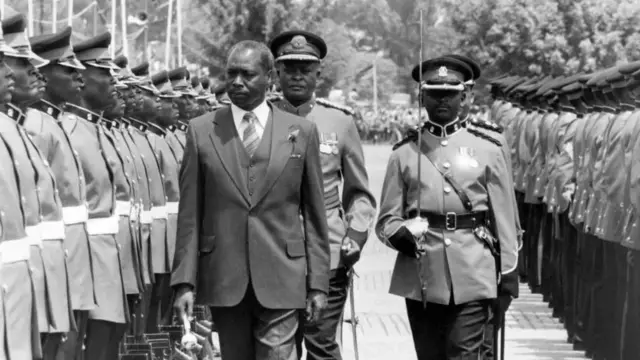 Image source,Gamma-Rapho via Getty Images
This week, the slogan “We are all Kikuyu,” trended on social media as young people rejected attempts to restore the ethnic divisions that have long plagued Kenyan politics. A counter-narrative, “We are all Kenyans,” emerged but failed to gain the same traction – with some seeing it as an attempt to dilute the expression of solidarity in the original message.
The Kikuyu, Kenya’s largest ethnic group from the Mount Kenya region, overwhelmingly supported Ruto in the 2022 elections, with Rigathi Gachagua, who hails from the region, as his deputy.
But the removal of Gachagua from office last year through a harsh impeachment process, which he described as a betrayal, sparked discontent in the region. Following the incident, some politicians loyal to Ruto have accused the Kikuyu of fomenting opposition to the president.
Political analyst Mark Bichachi says opposition to the president is not ethnically driven, but is taking place across diverse communities in both urban and rural areas.
He calls the “public outcry against the president and the government” “unprecedented” and “historic”, even surpassing the political turmoil of the 1980s and 1990s when Moi led a one-party government.
The period was marked by brutal repression and bloody battles for multi-party democracy, but Mr Bichachi told the BBC that the situation did not create the kind of pressure President Ruto is currently facing, adding that the tensions were linked to the Cold War and were felt across Africa.
But scholar Dr. Njoki Wamai says criticism directed at the president is not unusual, but part of political culture during times of conflict.
“All presidents, when they go against the constitution, against the will of the Kenyan people, have always faced a lot of criticism,” he told the BBC.
He points to past leaders such as founding president Jomo Kenyatta and his successor Moi – both of whom faced fierce opposition and lost public trust during difficult times – including after the assassinations of key political leaders and an attempted coup against Moi in 1982.
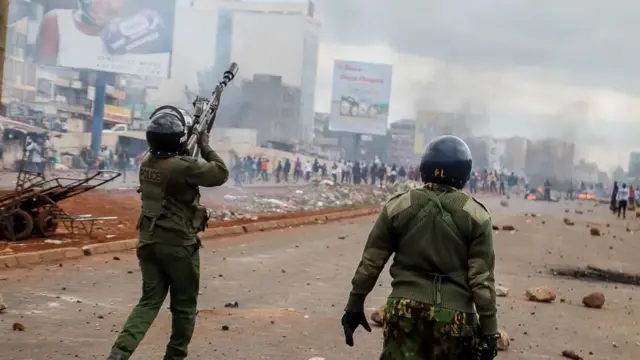 Image source,Getty Images
“What’s different (this time) is that the level of information dissemination is greater,” he says, noting the impact of Kenyan youth being digitally literate, so the widespread access to social media and digital tools has increased public discourse.
He also describes Ruto as having always been a “radical,” suggesting that his political views conflict with the liberal values embraced by many Kenyans – especially the youth.
This ideological difference, he says, has contributed to increasing tensions.
The current opposition campaigns are largely youth-led, online-based, decentralized and seemingly leaderless, many emerging from outside the established political class. Since last year, they have been driven by anger over the high cost of living, high taxes, corruption and police brutality.
But pointing to tribal politics and incitement as the driving force behind the latest unrest, the president said on Wednesday: “Let us put aside tribal divisions, hatred, pride and contempt. We are all Kenyans.”
He vowed to use “any means necessary” to maintain peace and order. He called on police to shoot protesters targeting businesses in the legs, rather than killing them. His remarks sparked further anger and ridicule.
 Image source,Bloomberg via Getty Images
Since last year, the Kenyan government has responded to protests and dissent with brutal repression, including mass arrests and alleged abductions by security forces.
It’s a strategy that human rights groups say has fueled public anger and alienated citizens from the government, with police accused of using excessive force to quell protests.
More than 100 people have been killed in a wave of anti-government protests since June last year. On Monday, July 7, 38 lives were lost, marking the worst day of unrest ever.
Rather than serving as a catalyst for police reform or pushing for efforts to pacify protesters, the deaths have often served as a spark for subsequent protests, turning grief into anger.
The government has blamed protesters for causing the violence, accusing them of attacking police stations and even attempting a coup.
Political communications expert Dr Hesbon Owilla calls the unrest “perhaps the most intense anti-government anger” in Kenyan history. He says it has brought people from different walks of life together in a stubborn struggle.
He explains how the president communicates with the people. He says Ruto’s promises to improve the welfare of ordinary people were “real, very real” and moved the campaign away from tribal mobilization towards grassroots politics.
“Then he became president. We are still waiting. What Kenyans are going through is worse,” he tells the BBC, noting the deep feelings of sadness among many Kenyans.
He says unlike previous governments that made cautious promises, Ruto delivered and continues to deliver, leading to a loss of hope.
“Disappointment leads to anger,” he says
Citing the example of the order to shoot protesters, he also says that the president often speaks when silence would serve him better – exposing himself too much and making serious national issues feel personal.
As a result, when there is criticism, it is directed at him, rather than being attributed to the failures of governance systems.
However, Ruto has repeatedly highlighted his administration’s efforts to improve the lives of all Kenyans, pointing to the government’s affordable housing project, universal health care, digital jobs, and overseas employment program as key achievements.
While inspecting one of the housing estates this week, he acknowledged the magnitude of youth unemployment but insisted that the problem existed before his presidency.
He stressed that his government was the first to take deliberate steps to address the crisis, citing government initiatives such as a housing project that he says has created hundreds of thousands of jobs.
The President asked for patience, as the problem would take time to resolve.
However, patience, especially amid the high cost of living, unfulfilled expectations, and mounting despair, is not something many Kenyans feel they can afford.
Some of these major and exemplary programs have come at a high cost to Kenyans, who now have a 1.5 percent housing tax and a 2.75 percent health insurance tax deducted from their monthly income. The pain of paying some of these higher taxes has dominated daily conversation, especially with the view that higher taxes have not translated into better public services.
To the government’s credit, Dr Owilla says some initiatives, such as the universal health care project, have had significant results, and others could ultimately benefit many.
But Mr Bichachi argues that the government has “lost its way of thinking”, and its tone has remained unchanged despite growing public resentment.
He says the issue cannot change based on how the government operates – describing it as a “love-hate relationship” between the people and the presidency.
That is how “we find ourselves where we are”, he concludes, referring to the intense hatred now facing the president, who was once one of “the most admired and praised leaders Kenya has ever had”.