The Lower Eastern Times Opening The Third Eye

By: AFP
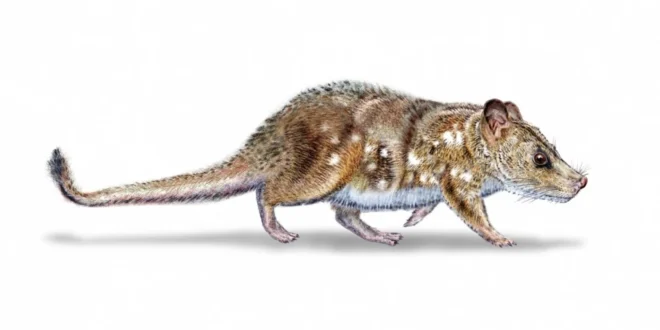
Scientists in Chile have uncovered the fossil of a mouse-sized mammal that lived alongside dinosaurs around 74 million years ago in the Upper Cretaceous period.
The species, named Yeutherium pressor, weighed between 30 and 40 grams and is the smallest mammal ever discovered in Chilean Patagonia. The find dates back to the time when South America was part of the ancient supercontinent Gondwana.
The fossil, consisting of a small jaw fragment with one molar and the crown and roots of two others, was unearthed in the Río de las Chinas Valley in the Magallanes region, about 3,000 kilometres south of Santiago.
The research was carried out by a team from the University of Chile and the Millennium Nucleus on early mammals, led by Hans Puschel, and published in the Proceedings of the Royal Society B.
Despite resembling a tiny rodent, Yeutherium pressor was likely an egg-laying mammal, similar to the platypus, or a marsupial that carried its young in a pouch. Analysis of its teeth suggests it fed on tough plant material.
The species, like the dinosaurs it co-existed with, vanished abruptly around 66 million years ago at the end of the Cretaceous period.