The Lower Eastern Times Opening The Third Eye

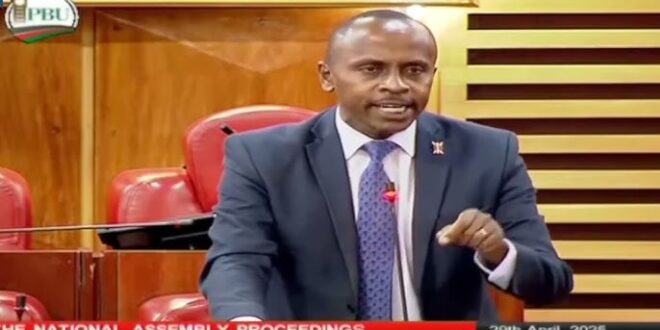
Kenyan Members of Parliament have come out strongly against the BBC following the release of its documentary Blood Parliament, accusing the British broadcaster of pushing a foreign agenda and misrepresenting the country’s democratic institutions.
Click here to join our WhatsApp Channel
The documentary, which aired on Monday, explores the lethal response to anti-government demonstrations in June 2024. It alleges that Kenyan security forces were given clandestine “shoot-to-kill” orders prior to receiving official deployment directives.
The film has stirred intense reactions in the National Assembly, with numerous legislators dismissing it as exaggerated and inaccurate.
Dagoretti South MP John Kiarie questioned the motive and timing of the documentary, saying:
“Mr. Speaker, while we all condemn violence against our people, this film seems more like a tool of foreign influence than journalism. Is this really the BBC, or is it an extension of British foreign policy? Kenya will not be lectured by a nation whose troops have previously committed crimes on our land.”
He also reminded the House of Parliament’s past move to impose stricter conditions on the British Army Training Unit Kenya (BATUK), ensuring British soldiers are held accountable under Kenyan law.
“No MP here supports the abuse of citizens by uniformed officers,” Kiarie continued. “And let’s not forget, in the previous Parliament, we refused to approve the renewal of BATUK’s operational terms.”
Mandera North MP Bashir Abdullahi criticized both local media and the documentary’s framing, claiming it unfairly demonizes Parliament.
“This documentary is both tragic and provocative—especially with the title Blood Parliament,” he said. “Yes, that day challenged our democracy, but we are a sovereign state that has moved forward in peace. Why hasn’t the BBC produced similar content about the Capitol Hill riots or the ongoing civilian deaths in Gaza?”
Bashir acknowledged the casualties but emphasized Kenya’s efforts toward healing and unity.
“Yes, we mourn those lost. It was a dark day for our democracy. But we’ve taken steps to heal and reconcile as a nation.”
On the other hand, Suba North MP Millie Odhiambo defended the documentary, arguing it brought necessary attention to unresolved issues.
“We haven’t handled this matter properly. The BBC simply highlighted what we ourselves have failed to address. It’s time we take responsibility and deliver justice to the victims,” she said, warning against deflecting blame onto foreign entities instead of confronting internal shortcomings.
Homa Bay Town MP Peter Kaluma took the harshest stance, calling for the BBC’s license to be revoked.
“That film isn’t journalism—it’s propaganda posing as investigative reporting,” Kaluma said. “It’s biased, inflammatory, and designed to provoke unrest. If the BBC can’t adhere to the standards of fair reporting, it has no place operating in Kenya.”
In a statement, the BBC stood by the documentary, noting that its findings were drawn from a thorough review of more than 5,000 photos and multiple eyewitness accounts. The broadcaster maintains that its reporting was in the public interest and reflects a commitment to uncovering the truth.